Best Touch Screen Laptop Buying Guide — Black Friday Deals 2026
A touch screen laptop can make selecting, scrolling, and working with on-screen controls feel more direct, but the right choice depends on more than the panel. Operating system, memory, storage, screen size, and the kind of work you expect to do all shape whether a configuration suits your routine. This guide compares three options: a Chromebook, a Windows laptop with a 15.6-inch display, and a larger-screen Windows model. For Black Friday, treat each listing as a configuration to verify, not just a headline offer. Match the exact model and listed specifications to your needs before deciding whether its offer is worthwhile.
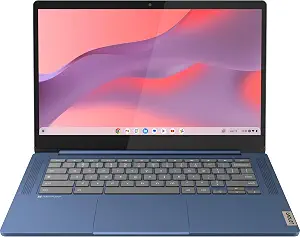
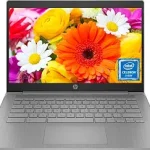
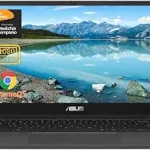
Best Budget is the supplied editorial label for this Lenovo Chromebook; it is a category choice, not a statement about its current price or an active Black Friday discount. The defining decision is the operating system: this laptop runs Google Chrome OS. If that is the environment you intend to use, the 14-inch Full HD touchscreen gives you a stated screen size and resolution to compare with the larger Windows options. Think about the work you regularly do and whether your usual software belongs in the Chrome OS environment before adding this model to a Black Friday shortlist. Check the exact listing and configuration rather than assuming every similarly named Chromebook has these specifications.
The listed processor is a MediaTek Kompanio 520, an octa-core chip with 4x A73 at 2.0GHz and 4x A53 at 2.0GHz. The configuration pairs it with 4GB RAM and 64GB eMMC storage. Those details matter when you are deciding whether the listed memory and storage suit the files and tasks you have in mind. They are not a promise about performance for a particular workload. A shopper who expects to keep many files locally or needs particular software should examine those needs carefully and verify them against the exact product details before choosing. For a simpler comparison, note that this is the Chromebook in the group, rather than a Windows 11 Home model.
The product listing also specifies Wi-Fi 6, 11ax 2×2, Bluetooth 5.1 combo, and battery life of 13.5 hours. Use those stated details as comparison points for your own plans; the battery figure should not be treated as a guarantee of the time you will get in every situation. For a Black Friday purchase, check both the product identity and the terms of the offer you are considering; no deal is assumed here. The Lenovo may merit a closer look if its Chrome OS setup, touchscreen size, and stated memory and storage align with what you need. Its Best Budget label reflects its place in this guide, not a verified sale price.
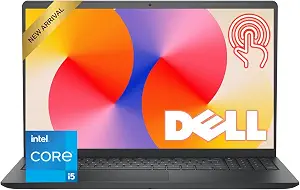
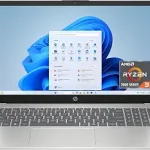
Best Overall is an editorial pick among these three options, not a claim of measured superiority. The Dell 15.6-inch FHD touchscreen laptop is a useful starting point if you want a Windows system and a conventional-size touch display in one package. Its 15.6-inch Full HD panel has an IPS panel, anti-glare finish, and 120Hz refresh rate. Those are concrete details to weigh if you expect to move between reading, browsing, and selecting items on screen. The FHD 1080p webcam is another relevant specification for a routine that includes video calls. During Black Friday, check that the offer applies to this exact Dell configuration rather than relying on a general product name.
The listed hardware includes a 13th Gen Intel Core i5-1334U processor with 10 cores and speeds up to 4.60GHz, 8GB DDR4 RAM, and a 512GB SSD. Windows 11 Home is the operating system. Consider the three hardware details together with the applications and files you expect to use: the processor identifies the listed chip, while memory and storage describe other parts of the configuration. The supplied specifications do not establish how a particular workload will perform, so avoid choosing it on processor wording alone. Instead, check whether the named operating system and the exact memory and storage configuration fit your plans.
For a workday that involves opening documents, navigating web pages by touch, and joining calls, the screen and webcam details give you specific points to compare. The listed battery life is up to 9 hours; use that figure as a reference when thinking about where you plan to work, rather than as a guarantee for every routine. If you are comparing Black Friday offers, confirm the display, processor, memory, storage, and operating system all match this listing. The Dell earns the Best Overall label here because its provided specifications bring together a touch display, Windows 11 Home, a 1080p webcam, and clearly stated core components—not because the label guarantees it is right for every shopper.
Key specs
Processor
13th Gen Intel Core i5-1334U processor with 10 cores and speeds up to 4.60GHz
Memory
8GB DDR4 RAM
Storage
512GB SSD
Display
15.6-inch Full HD touchscreen with a 120Hz refresh rate, IPS panel, and anti-glare finish
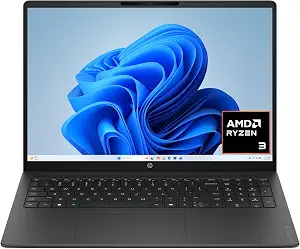
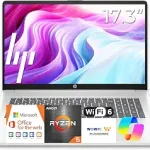
Best for a Larger Touch Workspace is the editorial label for the HP OmniBook 3 16 inch Laptop PC. The reason is clear in its listed display: 16 inches diagonally, with a 2K (1920 x 1200) touch IPS panel, micro-edge design, anti-glare finish, and 300 nits. If your planned routine benefits from a larger touch area for navigating pages or selecting on-screen items, those are the display details to compare. The label does not mean every person will prefer the larger format. Consider where you expect to use the laptop and whether this screen size suits that setting before weighing a Black Friday offer.
This HP runs Windows 11 Home and lists an AMD Ryzen 3 7320U processor, with up to 4.1 GHz max boost clock, 4 MB L3 cache, 4 cores, and 8 threads. Its memory is 8 GB LPDDR5-5500 MT/s, onboard, and its storage is a 512 GB PCIe NVMe M.2 SSD. The specifications give you a concrete checklist when comparing the product with the Dell or another listing: note the operating system, the stated memory type and amount, and the storage configuration, rather than comparing product names alone. They do not establish how well it will handle a specific application, so consider your intended software and workload independently.
For calls and wireless use, the listing specifies a 1080p FHD camera with HDR auto switch, temporal noise reduction, and integrated dual array digital microphones. Wireless is listed as a MediaTek Wi-Fi 6 MT7920 (2×2) and Bluetooth 5.4 wireless card. These details can help you identify whether this configuration matches the features you want to review, without implying a particular call outcome or connection in your location. Before a Black Friday purchase, verify that the offer is for this HP configuration and compare its exact display and component details with your own checklist. The larger touch display is the basis of its distinct role in this guide.
AMD Ryzen 3 7320U (up to 4.1 GHz max boost clock, 4 MB L3 cache, 4 cores, 8 threads)
Memory
8 GB LPDDR5-5500 MT/s (onboard)
Storage
512 GB PCIe NVMe M.2 SSD
Graphics
AMD Radeon 610M Graphics
Wireless
MediaTek Wi-Fi 6 MT7920 (2×2) and Bluetooth 5.4 wireless card
Camera
1080p FHD camera with HDR auto switch, temporal noise reduction and integrated dual array digital microphones
Operating system
Windows 11 Home
Build a shortlist around the moment you reach for the screen
Imagine the ordinary sequence of your day before comparing offers. You might begin by opening a browser, move between documents, use touch to select a control, and later join a call. That sequence helps distinguish useful specifications from details that are simply prominent in a listing. For direct on-screen navigation, all three products here have a touch display, but their stated sizes differ: the Lenovo is 14 inches, the Dell is 15.6 inches, and the HP is 16 inches diagonally. Think about whether you value the more compact listed screen size or want more display area; the facts provided do not tell you how each laptop will feel to carry or position.
Next, identify the software environment you need. The Lenovo runs Google Chrome OS, while the Dell and HP run Windows 11 Home. If you depend on particular applications, verify that your required software works in the operating system you select instead of assuming the touchscreen determines compatibility. Then write down your essential tasks and the specifications you want to confirm for them. A Black Friday shortlist is more useful when it begins with those needs than when it begins with a countdown or a discount claim. Keep the decision grounded in the exact model, operating system, display, memory, and storage shown for the offer you are considering.
Compare the panels by the details you will actually notice
Touch is a shared feature, but the panel descriptions are not interchangeable. The Lenovo lists a 14-inch Full HD touchscreen. The Dell lists a 15.6-inch Full HD touchscreen with a 120Hz refresh rate, IPS panel, and anti-glare finish. The HP lists a 16-inch diagonal, 2K (1920 x 1200) touch IPS display with a micro-edge design, anti-glare finish, and 300 nits. These are the supplied descriptions; use them to compare the options without assuming that a higher figure alone settles which screen is best for you.
Picture the kinds of interactions you expect: tapping through a page, choosing controls, or keeping a larger area visible while you work. Then consider where you will use the laptop and what screen size fits that setting. The listed anti-glare finishes on the Dell and HP may be relevant if that feature is on your checklist, while the Lenovo listing does not provide the same panel detail. Do not read that difference as proof that a feature is absent; compare only what each listing states. For Black Friday, match the exact display description to the model and variant attached to the offer, rather than choosing from a screen-size headline alone.
Read the system specifications as a practical checklist
Processor, memory, and storage answer different configuration questions, so compare them as a set. The Lenovo lists a MediaTek Kompanio 520, 4GB RAM, and 64GB eMMC. The Dell lists a 13th Gen Intel Core i5-1334U, 8GB DDR4 RAM, and a 512GB SSD. The HP lists an AMD Ryzen 3 7320U, 8 GB LPDDR5-5500 MT/s onboard memory, and a 512 GB PCIe NVMe M.2 SSD. The processor descriptions identify different chips; the memory and storage descriptions also vary. Those facts support careful comparison, but they do not provide a direct performance test or say which model will suit every task.
Start from what you plan to open, create, and keep on the laptop. If local storage is important to your plans, note the stated storage type and capacity and consider whether they fit your needs. If you have a memory requirement, check the listed amount and type against it. Avoid treating one component as a substitute for the rest, or assuming that a Black Friday offer has the same configuration as another listing with a similar name. Before choosing, verify the exact processor, memory, storage, and operating system attached to the product page you are considering. This turns technical shorthand into a useful comparison without promising an outcome the specifications do not establish.
Choose the operating system before judging the offer
The clearest platform split in this group is between the Lenovo Chromebook, which runs Google Chrome OS, and the two Windows laptops, which run Windows 11 Home. Make a list of the software you need and check its support for the platform you are considering. If a specific program, workflow, or file-handling requirement matters to you, verify it directly rather than assuming that a touchscreen makes the systems equivalent. This choice can narrow the shortlist before you spend time comparing display details or Black Friday offers.
Once you have selected the platform that fits your plans, compare configurations within that context. The Lenovo pairs Chrome OS with a MediaTek processor, 4GB RAM, and 64GB eMMC. The Dell and HP pair Windows 11 Home with different processors and listed memory and storage. These differences can help you understand what each listing describes; they are not a basis for inventing compatibility or claiming a performance result. During Black Friday, check the exact operating system and specifications shown for the offer. A familiar product family name or a touchscreen label alone is not enough to establish that the configuration matches your requirements.
Keep camera, wireless, and battery claims in perspective
Supporting specifications can matter when a laptop is part of a routine that includes calls or wireless connections. The Dell lists an FHD 1080p webcam and up to 9 hours of battery life. The HP lists a 1080p FHD camera with HDR auto switch, temporal noise reduction, and integrated dual array digital microphones, as well as Wi-Fi 6 and Bluetooth 5.4. The Lenovo specifies Wi-Fi 6, 11ax 2×2, Bluetooth 5.1 combo, and battery life of 13.5 hours. These are the details provided for the respective products; they should not be expanded into promises about call quality, connection strength, or the time you will achieve in your own use.
Ask which listed features are important to your routine, then compare like with like where the information is available. A battery-life figure is a reference point, not a guarantee for your particular situation. If wireless capability or a camera feature is essential, confirm it on the exact product configuration you plan to buy. Do not assume that missing details in one product record prove a feature is absent. Black Friday can make comparisons feel rushed, so use this checklist to slow down: verify the model, read the stated feature, and decide whether it matters to your planned use before treating an offer as a match.
Make your Black Friday choice
The most useful shortlist is the one that reflects your screen preference, operating system, and actual configuration needs. The Lenovo stands apart as the Chrome OS option with a 14-inch Full HD touchscreen; the Dell combines Windows 11 Home with a 15.6-inch Full HD touch display and a 1080p webcam; the HP offers a larger, specified 16-inch diagonal touch display and Windows 11 Home. For Black Friday, verify the exact model and every key specification attached to the offer, then decide whether it fits your checklist. No label or seasonal offer replaces that comparison.