Best Chromebook Buying Guide — Black Friday Deals 2026
A Black Friday Chromebook search can quickly turn into a comparison of screen sizes and sale labels, but the useful question is how each configuration fits your routine. The Lenovo Flagship Chromebook pairs a touch display with a modest memory and storage configuration; HP’s Chromebook 15 emphasizes a larger screen, more memory, and a stated update end date; Acer’s Chromebook Plus 514 offers a sharper-detail video-call camera and a higher-spec display. Those differences point toward distinct priorities rather than one universal choice. Before comparing Black Friday offers, decide what you will do most often, which details matter for that work, and whether the exact model and configuration match the listing.
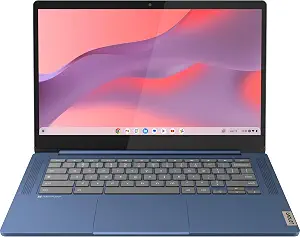
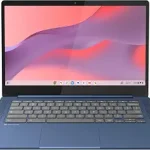
Best Budget is the editorial label for the Lenovo Flagship Chromebook, a choice grounded in its listed 4GB RAM and 64GB eMMC configuration alongside a 14-inch Full HD touchscreen. The specifications offer a clear starting point for shoppers who want a touchscreen Chromebook and are willing to keep their decision focused on the stated configuration. The MediaTek Kompanio 520 is an octa-core processor, and the laptop runs Google Chrome OS. Those details can help you compare it with the demands of your own routine, but they do not establish performance for any particular task. Consider the applications you rely on and how much local storage you expect to need.
Touch input may be useful if you prefer tapping or scrolling directly on the display during everyday browsing or reading. The listing specifies Full HD resolution, giving shoppers a concrete display detail to compare with their preferences. It does not provide a display brightness figure or other panel details, so avoid assuming how the screen will look in a particular room. The Lenovo’s 4GB of RAM and 64GB of eMMC storage are important counterweights to its touch feature: think about whether that stated memory and storage configuration fits your expected workload before prioritizing the screen.
Lenovo lists Wi-Fi 6 and Bluetooth 5.1, details that may matter when checking the wireless standards used by your home network and accessories. The stated battery life is 13.5 hours. Treat that as the listed figure, not a guarantee of how long the Chromebook will last under your specific mix of tasks and settings. This model may appeal if those wireless details, Chrome OS, and a touch display align with what you want. Shoppers who need a different memory or storage configuration should verify whether the exact listing matches their needs rather than assuming a similar product name means identical specifications.
During Black Friday, use Best Budget as a prompt to compare the precise Lenovo configuration, not as proof of a particular price or savings. Check that the offer identifies the 14-inch Full HD touchscreen version and the same processor, memory, and storage details. The label reflects its place among the products in this guide, not a market-wide award or a measured value judgment. If the touch display is your main reason for considering it, compare that benefit with the 4GB RAM and 64GB eMMC listed here. That tradeoff may be perfectly acceptable for one shopper and a reason to choose another configuration for someone else.
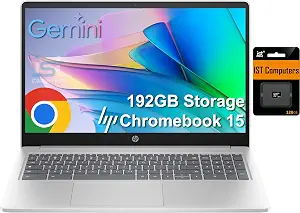
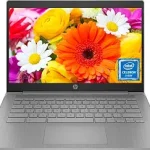
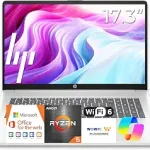
Best Overall is an editorial choice for the HP Chromebook 15 because its listed configuration combines 8GB of DDR5 RAM with an Intel N200 four-core processor, a 15.6-inch screen, and a stated ChromeOS update end date. That mix gives shoppers several practical details to weigh together rather than making the choice hinge on a single feature. It may suit someone who wants a Chromebook for a shared desk, home admin, online coursework, or other routines where a larger screen and a clear update horizon are useful considerations. These are configuration-based reasons for the label, not a claim of measured superiority.
The 15.6-inch screen is the largest stated display size among these three listings, which may be appealing if you prefer a more spacious-looking laptop format for reading or keeping a document visible while working. The supplied details do not specify display resolution or touch support, so check the exact listing if either is essential. The Intel N200 and 8GB of DDR5 RAM provide the concrete processing and memory details to compare against your own workload. Consider the applications and browser tabs you expect to use, rather than assuming a processor name alone guarantees a particular experience.
For calls, HP lists an HD webcam with a privacy shutter. The shutter is a particularly straightforward feature to consider if you want a physical way to cover the camera when it is not in use; the listing does not provide more detail about the webcam’s image quality. Two SuperSpeed USB Type-C ports are specified with USB Power Delivery and DisplayPort 1.4, useful details to check against the displays and charging accessories you intend to connect. HP also lists an Auto Update Expiration date of June 2030. That stated date can help frame a longer-term purchase decision, but it is not a promise about any particular application or future support beyond the supplied information.
For Black Friday, compare the exact HP configuration in the offer with the product details here, especially the memory, storage description, ports, webcam shutter, and update date. The name includes 192GB storage, while the supplied specifications do not explain its storage arrangement; verify the listing’s exact configuration instead of assuming how that capacity is provided. Best Overall here means the HP’s combination of stated details can address several common shopping priorities. If a privacy shutter or the listed update date is not important to you, another model’s touch display, camera detail, or different configuration may make more sense.
Key specs
Processor
Intel N200 Processor with 4-cores
Memory
8GB of DDR5 RAM
Webcam
HD webcam with privacy shutter
USB-C ports
2 x SuperSpeed USB Type-C 5Gbps (USB Power Delivery, DisplayPort 1.4)
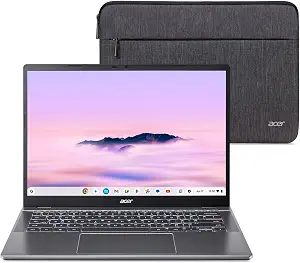
Best for video-call camera detail is the Acer Chromebook Plus 514’s editorial label, based on its specified FHD camera with facial auto exposure and 1080p video at 60 FPS. That description gives shoppers a camera detail to consider when calls are a regular part of their routine. It does not establish how the camera will look in every room or network condition. The Acer also lists an Intel Core i3-1315U processor, 8GB of LPDDR5 on-board memory, and a 256GB PCIe Gen4 SSD. Consider the whole configuration and your intended uses rather than treating the camera label as a recommendation for every shopper.
Its 14-inch WUXGA display uses a 16:10 format, has a stated 300-nit brightness, includes touch, and has an anti-glare coating. Those are distinct details to weigh if you spend time reading, working with documents, or using touch input. The listing’s specifics give you more to compare than a screen-size label alone, but they do not say how the display will suit your room or personal preferences. If screen format, touch, or the stated brightness is important, confirm that the Black Friday offer is for this Chromebook Plus 514 configuration.
For wireless networking, Acer specifies Intel Wi-Fi 7 with dual-stream support in the 2.4GHz, 5GHz, and 6GHz bands. The laptop also has two USB Type-C ports described as USB 3.2 Gen 2, up to 10 Gbps, with DisplayPort over USB Type-C and USB charging up to 65W. These details are useful when checking your network and accessories, but they do not guarantee a particular connection speed or accessory outcome. The operating system is Chrome OS. Compare the listed port functions with the equipment you actually plan to use.
This Acer is the only model here assigned the camera-focused label, and that distinction comes from its explicitly described camera specification—not from a comparison test. For Black Friday, confirm the camera wording and the rest of the configuration on the offer page, including display, memory, storage, and ports. If camera detail is not a priority, the HP’s listed privacy shutter and update date or Lenovo’s touchscreen and stated battery life may be more relevant decision points. Choose based on the features you will use, not on the implication that one label makes the Acer the right Chromebook for everyone.
Key specs
Display
14” WUXGA 16:10 300-nits touch display with anti-glare coating
Processor
Intel Core i3-1315U Processor – up to 4.5GHz, 6 cores, 8 threads, 10MB Intel Smart Cache
Memory
8GB LPDDR5 On-Board Memory
Storage
256GB PCIe Gen4 SSD
Wireless
Intel Wi-Fi 7 supports dual-stream Wi-Fi in the 2.4GHz, 5GHz and 6GHz bands
Camera
FHD Facial Auto Exposure Camera (1920 x 1080) with 1080p Video at 60 FPS
USB-C ports
2 – USB Type-C Ports USB 3.2 Gen 2 (up to 10 Gbps) DisplayPort over USB Type-C & USB Charging (Up to 65W)
Operating system
Chrome OS
Begin with the work your Chromebook must handle
Start your comparison by naming a few ordinary tasks rather than reaching first for a processor ranking. A student might prioritize reading, writing, and video calls; someone setting up a kitchen or home desk may mainly want browsing and account management. The supplied configurations give different starting points: Lenovo pairs a MediaTek Kompanio 520 with 4GB RAM and 64GB eMMC, HP lists an Intel N200 and 8GB DDR5 RAM, and Acer combines an Intel Core i3-1315U with 8GB LPDDR5 memory and a 256GB SSD. These are useful distinctions, but the facts alone do not predict how a specific application will perform.
Next, consider how much you expect to keep on the device and how you tend to work. The three storage descriptions are not the same, and HP’s product name refers to 192GB storage while the supplied specification does not say how that storage is arranged. Check the exact configuration and decide whether its stated capacity suits your files and habits. A shopper who mostly uses online services may weigh storage differently from someone who expects to keep more material locally. Neither situation makes one configuration automatically right.
On Black Friday, write down the non-negotiables before looking at offer labels: perhaps touch input, a particular memory configuration, a camera feature, or an update date. Then compare each exact product listing against that short list. This simple order keeps a prominent deal badge from distracting you from a mismatch. If two models both satisfy your requirements, use the remaining differences—such as screen format, ports, or wireless specifications—to decide which set of details better fits your everyday setup.
Let the display shape your daily routine
The screen details here represent different ways to choose, not a simple size ladder. Lenovo has a 14-inch Full HD touchscreen, Acer a 14-inch WUXGA 16:10 touch display with a stated 300-nit brightness and anti-glare coating, and HP a 15.6-inch display whose supplied facts do not specify resolution or touch support. If you like direct touch input, the Lenovo and Acer listings explicitly identify it. If you prefer a larger stated screen size, HP provides that dimension. Check the full listing when a display characteristic not included in these details is important to you.
Think about where you will place the Chromebook and what you want visible at once. A larger screen size may be a consideration for a fixed desk, while a 16:10 format or anti-glare coating may draw attention for other reasons. Those observations are ways to frame your preference, not promises about how a particular panel will feel in use. The Acer’s stated brightness is a specification to compare, but it cannot tell you how the display will look in every lighting condition. Personal preference and room setup still matter.
Black Friday listings can make it easy to focus on a headline screen size while overlooking the rest of the display description. Match the model name and the complete set of stated screen details before deciding an offer is comparable. In particular, do not assume that two products with similar diagonal measurements share resolution, brightness, or touch capabilities. If you are choosing between Lenovo and Acer, both specify touch, but their other stated display details differ. If you are considering HP, verify any screen feature that matters to you because it is not given in the supplied specifications.
Read camera and connection details against your setup
Video calls can make a camera feature more consequential than a general-purpose specification. Acer’s FHD camera is described with facial auto exposure and 1080p video at 60 FPS, which supports the camera-detail label in this guide. HP specifies an HD webcam with a privacy shutter, a different kind of detail that may be more relevant if you want a way to cover the camera. The Lenovo facts provided do not specify a webcam, so do not infer either a particular camera feature or its absence. Check the complete listing if camera requirements will determine your purchase.
Ports deserve the same practical treatment. HP lists two USB Type-C ports with USB Power Delivery and DisplayPort 1.4. Acer specifies two USB Type-C ports with DisplayPort over USB Type-C, USB charging up to 65W, and a stated transfer rate of up to 10 Gbps. These descriptions give you points to match against a display, charging arrangement, or other accessories, but confirm compatibility for the exact equipment you plan to connect. The supplied Lenovo details do not list ports, which is a reason to consult its full configuration if connections are central to your decision—not a reason to assume a port is missing.
Before a Black Friday purchase, make a short accessory checklist: the display connection you need, the charging method you expect to use, and any wireless standards relevant to your network. HP and Acer provide different USB-C descriptions; Lenovo lists Wi-Fi 6 and Bluetooth 5.1, while Acer lists Intel Wi-Fi 7 across specified bands. Those specifications help focus your questions, but they do not promise a particular network result in your environment. Verify that the exact model listing includes the features you rely on, especially when a retailer’s offer title is abbreviated.
Use update and battery figures as planning details
A stated update end date can be a useful part of a Chromebook decision when you are thinking about how long you want to keep it. HP lists an Auto Update Expiration date of June 2030. Treat that as the date supplied for this product, not as a statement about other models or a guarantee about every software or application detail. The provided facts do not give update dates for Lenovo or Acer, so look at their complete listings if update timing is a deciding factor. Avoid filling that information gap with assumptions based on brand or product family.
Lenovo lists 13.5 hours of battery life. That figure offers a point of comparison for someone deciding whether the stated battery claim matters to their routine, but actual use can vary with conditions not described here. The supplied HP and Acer facts do not include battery-life figures. That omission is not evidence that either model has a particular battery performance; it simply means these records do not provide a number to compare. If unplugged use matters, seek the relevant information on the exact product listing before making a choice.
These planning details can be easy to lose in a Black Friday rush. Put the HP update date and Lenovo battery figure on your checklist only if they answer a real question for you, and verify that the deal refers to the corresponding model. A date or battery claim should be weighed alongside screen, memory, storage, and connection needs. No single supplied number settles the purchase for every household, and the facts do not establish how long any particular shopper will keep a device.
Compare the exact offer, not just the sale language
Treat a Black Friday label as a reason to inspect an offer, not as evidence that the configuration is the one you intended to buy. Confirm the complete product name and compare the relevant details: Lenovo’s touchscreen and 4GB RAM with 64GB eMMC; HP’s 15.6-inch Chromebook, Intel N200, 8GB DDR5 RAM, ports, webcam shutter, and listed update date; or Acer’s Chromebook Plus 514 with its specified display, camera, and storage. Product titles may summarize only part of a configuration, so check the detailed listing before deciding that two offers match.
Then compare the offer with your own decision criteria, rather than trying to turn every specification into a score. Someone who values touch input may narrow the choice to the two models that explicitly list it. A shopper focused on a camera description may find Acer’s supplied details pertinent, while someone who values a shutter may consider HP’s webcam feature. If local storage or memory matters, compare those exact entries and verify the HP storage arrangement, which is not explained in the supplied facts. The right emphasis depends on your needs.
Finally, review the complete terms shown with the offer and make sure the selected configuration is the one you mean to purchase. This guide does not establish a current discount, price, stock status, or seller policy, and a Black Friday promotion should not be assumed from a product’s inclusion here. A careful match between model, configuration, and priorities is more useful than chasing a banner. If a listing leaves a decisive detail unclear, pause and verify it before placing the order.
Make your Black Friday choice
The best Chromebook choice in this group depends on which listed details solve your everyday problems. HP is the Best Overall editorial pick for its combination of stated memory, ports, webcam shutter, and update date; Lenovo is Best Budget for shoppers drawn to its touch display and stated configuration; Acer is Best for video-call camera detail because its camera description is explicit. These labels are guide-specific, not test results or market-wide awards. As Black Friday approaches, verify the precise offer and choose the features you will actually use. A considered match is more valuable than a deal label on its own.