Best Laptop Students Buying Guide — Black Friday Deals 2026
A student laptop should fit the work it is actually expected to do, not just look appealing in a Black Friday listing. These options span Chrome OS models with compact stated memory and storage configurations and a Windows-style IdeaPad listing with a larger touchscreen, more memory, and an SSD. That makes the first decision practical: check course software requirements, how the student handles files, and whether a touchscreen matters. Black Friday can make comparing listings worthwhile, but the offer is only useful if its exact model and configuration match those needs.
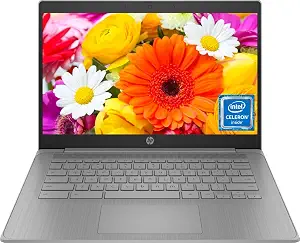
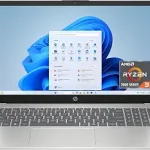
HP 14″ HD Chromebook Laptop for Students (ASIN B0C8171GTK)
Best Budget is the editorial label for the HP 14-inch HD Chromebook Laptop for Students, whose listed configuration is straightforward: an Intel Celeron N4120 processor with 4 Cores & Threads, 4GB RAM, 64GB eMMC, and Chrome OS. Its 14-inch display has a resolution of 1366 x 768 pixels. This can be a useful candidate for shoppers whose priority is a basic Chromebook configuration, but the label does not mean it is the right fit for every student or that a Black Friday price makes it suitable for every course.
Start with the operating system. A student should check whether their required coursework tools work with Chrome OS before choosing this laptop. That is especially important when instructions specify software or a workflow, since the product facts do not identify support for any particular application. Then consider the stated memory and storage in relation to the student’s own habits: what they need to keep locally, and what tasks they expect to have open as they work. The listing supplies the capacity figures, but not a guarantee that they suit every workload.
The display’s 1366 x 768 pixels resolution is a concrete point to compare with the student’s preferences and study materials. Some students may focus on reading and writing, while others may want to see more content at once; consider how the stated resolution fits the way the student works rather than assuming one screen is universally preferable. The 802.11ac wireless specification is also useful to note when comparing listings, though it does not establish what a student’s home, campus, or other network will provide.
For a Black Friday shortlist, this HP is worth considering when the shopper wants the listed Chrome OS setup and its memory, storage, and screen details align with course needs. Check the exact offer and configuration before deciding; do not infer a discount, availability, or a different specification from the seasonal label. If a student has specific software requirements, resolve that question before focusing on the sale. The Best Budget designation is a guide to its role among these three products, not a claim about the lowest current price or a market-wide ranking.
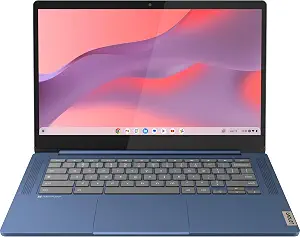
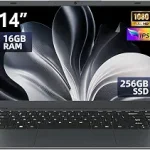
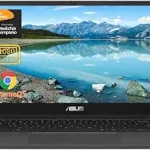
Best Overall is an editorial pick for students who want a Chrome OS laptop with a Full HD touchscreen and a stated battery-life figure. The Lenovo Flagship Chromebook has a 14-inch Full HD Touchscreen, 4GB RAM, 64GB eMMC, and Google Chrome OS. Those details give shoppers a concise starting point: consider whether the screen format suits the student’s usual study setup, and whether the listed memory and storage fit the work and files they expect to keep on the device. The label is not a claim of measured superiority; it reflects this combination of listed features among the options here.
Its MediaTek Kompanio 520 processor is described as an Octa-Core processor, with 4x A73 @2.0GHz + 4x A53 @2.0GHz. That wording is useful for identifying the configuration, but it does not by itself establish how any particular course application will behave. Before a Black Friday purchase, students should check whether required tools and workflows are supported by Google Chrome OS. That step matters especially when a course names specific software or expects a particular working environment; do not assume that a laptop is suitable simply because it is presented as a student Chromebook.
The listed wireless details are Wi-Fi 6, 11ax 2×2 + Bluetooth 5.1 combo. The product also states battery life of 13.5 hours. Treat that figure as the listing’s claim rather than a promise of the same result in every student’s routine. Actual expectations can depend on how a device is used, so a student who studies away from a desk should consider the stated figure alongside their own schedule rather than relying on it alone. Neither detail replaces checking the rest of the configuration.
During Black Friday, compare the exact Lenovo listing and variant rather than assuming every offer with a similar name has identical details. This model may suit a student who wants a touchscreen and prefers Chrome OS, provided the course requirements and 4GB RAM plus 64GB eMMC configuration make sense for them. If local files or required applications are a major part of the student’s routine, verify those needs first. The feature mix earns its Best Overall label within this guide, while the best personal choice still depends on those checks.
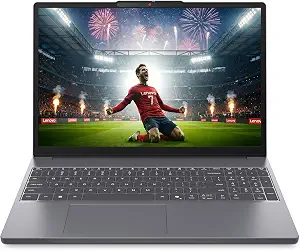
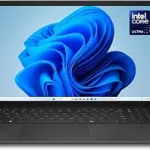
Best for a larger touchscreen workspace is the editorial label for the Lenovo IdeaPad Slim 3i. Its stated display is a 15.3-inch WUXGA Touchscreen Display, a feature to weigh if the student prefers a larger screen area for the way they arrange reading, notes, or other study material. That is a preference-led reason to consider it, not a claim that every student benefits from the same screen. The listed configuration also differs from the two Chromebooks, so the intended work and operating-system requirements deserve attention before a Black Friday purchase.
The IdeaPad Slim 3i lists an Intel Core Ultra 5 Processor 322, 16GB RAM, and 1TB SSD Storage. Those specifications provide a different memory and storage configuration from the Chromebook options in this guide. Students can use that distinction to ask practical questions: how much local storage do they want for their files, and does the listed memory suit the work they expect to do? The figures do not establish performance in specific applications, so check course requirements and do not treat a specification alone as proof that a particular program will meet expectations.
Its 120Hz Refresh Rate is another listed screen detail. A student deciding whether this is relevant should consider their own preferences and the tasks they spend time on, rather than treating the figure as a universal advantage. The 60 watt-hours battery capacity is also stated, but it is not a battery-life estimate. Students who need to plan around time away from a power source should not translate that capacity figure into hours; look for a directly stated battery-life claim if that information is important to the decision.
Black Friday shoppers considering the IdeaPad should verify the exact model and configuration shown in the offer, including the processor, touchscreen, memory, and SSD storage. Its Best for a larger touchscreen workspace label highlights the display’s size and touch feature, not a measured result or guarantee of fit. This option may make sense for a student who values those listed attributes and whose coursework requirements match the device. If the student does not need that screen format or storage configuration, compare the alternatives on the needs that matter instead of treating a seasonal offer as a reason to stretch beyond them.
Key specs
Processor
Intel Core™ Ultra 5 Processor 322
Display
15.3″ WUXGA Touchscreen Display
Memory
16GB RAM
Storage
1TB SSD Storage
Refresh rate
120Hz Refresh Rate
Battery capacity
60 watt-hours
Let the course determine the operating-system shortlist
Before comparing screens or seasonal offers, find out what the student’s course actually requires. The HP and Lenovo Chromebook listings specify Chrome OS or Google Chrome OS; the IdeaPad Slim 3i listing does not provide an operating-system fact here. Do not fill that gap by assumption. Check the exact listing and the course’s own instructions for the required environment, applications, or workflow. A student who has been told to use particular software should confirm that requirement directly before deciding among these products.
This check is more useful than making a broad judgment about which category is best for all students. A Chromebook may be a natural candidate when the course requirements align with its stated operating system, but the listing facts alone do not establish compatibility with a student’s tools. Likewise, the IdeaPad’s processor and storage details do not prove that it supports any particular application. Ask the student or course contact what is required, then compare the answer with the exact product details.
Black Friday can put attention on the offer before the practical questions get answered. Reverse that order: establish the required software environment first, then compare eligible configurations and offers. If the course requirements remain unclear, pause rather than treating a lower displayed price or a familiar product name as confirmation. A suitable laptop starts with the student’s actual work, and the listing must match that work closely enough to justify a purchase.
Picture the study setting before settling on a screen
Screen choice is personal because students do not all study in the same way. The HP Chromebook lists a 14-inch display with 1366 x 768 pixels resolution. The Lenovo Flagship Chromebook has a 14-inch Full HD Touchscreen, while the IdeaPad Slim 3i lists a 15.3-inch WUXGA Touchscreen Display. These stated details let shoppers compare size, resolution descriptions, and touch features without assuming that one configuration is automatically more comfortable or useful.
Think about the student’s usual work: whether they mostly read, type, refer to materials, or prefer touching the screen as part of their interaction. These are prompts for choosing, not claims about how a specific device will behave. If seeing more content at once is important, compare the display descriptions and consider the student’s own preferences. If touch is a priority, note which listings explicitly identify a touchscreen. Do not infer an unlisted feature from a product name or from another model in the same family.
At Black Friday, verify that the screen details belong to the exact variant in the offer. Similar product names can make it easy to overlook a configuration difference, so compare the listing’s display description with the student’s chosen priorities. A student who has no strong preference for a larger screen may sensibly focus elsewhere, while someone who specifically wants a touchscreen can use that stated feature as a filter. The point is to match the display to real study habits, not to chase a seasonal badge.
Use memory and storage figures as planning prompts
The two Chromebook listings each specify 4GB RAM and 64GB eMMC. The IdeaPad Slim 3i lists 16GB RAM and 1TB SSD Storage. Those are meaningful configuration differences to notice, but they do not independently predict how a particular student’s applications will run. Use them to frame questions about the workload and file habits: what does the course require, how much does the student want stored on the device, and what kinds of tasks do they expect to handle?
Avoid treating a storage number as a complete description of a student’s file plan. The provided product details do not explain how a student might organize, back up, or access their materials. Instead, ask whether the listed local capacity fits the intended routine and check any course-specific requirements. In the same way, memory capacity is a specification, not a guarantee of suitability for every set of open tasks. The student’s own needs should guide the comparison.
For Black Friday, compare the exact memory and storage configuration attached to the offer, not just the headline model name. Confirm the figures on the listing before making a decision, particularly if the student has already identified a minimum requirement. If the course does not call for a particular configuration, choose based on realistic use rather than assuming that the largest figures are necessary. If requirements are strict, resolve them before purchase instead of relying on a broad product category.
Read processor, wireless, and power details with restraint
The listed processors are not described in the same way: the HP names an Intel Celeron N4120 with 4 Cores & Threads; the Lenovo Chromebook names a MediaTek Kompanio 520 processor with its Octa-Core details; and the IdeaPad Slim 3i lists an Intel Core Ultra 5 Processor 322. These names and details help identify configurations. They are not enough to promise how a given application will perform, so students should consult course requirements and avoid turning processor labels into unsupported conclusions.
Wireless specifications differ too. The HP lists 802.11ac, while the Lenovo Chromebook lists Wi-Fi 6, 11ax 2×2 + Bluetooth 5.1 combo. A listed wireless standard is not a description of the network available where a student studies. Check the student’s actual connectivity needs and the exact listing, rather than assuming that a specification guarantees a particular connection in every setting.
The Lenovo Chromebook states battery life of 13.5 hours. The IdeaPad Slim 3i lists battery capacity of 60 watt-hours, which is a capacity figure rather than a stated duration. Keep those descriptions distinct. Students who need to plan a day around charging should consider only directly stated battery-life information, and should treat a listed claim as a reference rather than a promise of identical use in every routine. Black Friday should not change how carefully these specifications are interpreted.
Compare the Black Friday offer, not just its headline
A Black Friday label does not establish that a particular listing is discounted, available, or configured as expected. Compare the exact offer shown at the time of shopping with the student’s shortlist. Check the product name and the specifications that matter most: operating system, display, processor, memory, storage, and any stated wireless or battery information. The goal is to confirm that the item under consideration is the one whose facts informed the decision.
Keep the student’s must-haves separate from preferences. A course requirement for a particular software environment is a decision gate; a preference for a touchscreen may help distinguish between models once that gate is met. Similarly, a larger listed storage configuration may be relevant to one student’s plan but unnecessary to another. Writing down the non-negotiable requirements before browsing can help prevent a seasonal presentation from replacing a careful fit check.
If the offer’s exact variant is unclear, do not assume that details from another version apply. Recheck the listing or wait until the configuration can be confirmed. Compare only information that is actually provided, and do not infer savings or value from an unverified reference price. A good Black Friday decision is one that matches the student’s requirements and the confirmed product configuration, whether or not a seasonal offer is ultimately the reason to buy.
Make your Black Friday choice
For students choosing among these laptops, start with course requirements, then weigh the screen, operating system, and stated memory and storage against everyday study habits. The HP Chromebook offers a specified Chrome OS setup; the Lenovo Chromebook adds a Full HD touchscreen and a stated battery-life figure; the IdeaPad Slim 3i lists a larger touchscreen and different memory and storage figures. Black Friday can be a useful time to compare, but the exact configuration matters more than the seasonal label. Confirm the fit first, then decide whether the offer is worth pursuing.