Check Price on Amazon
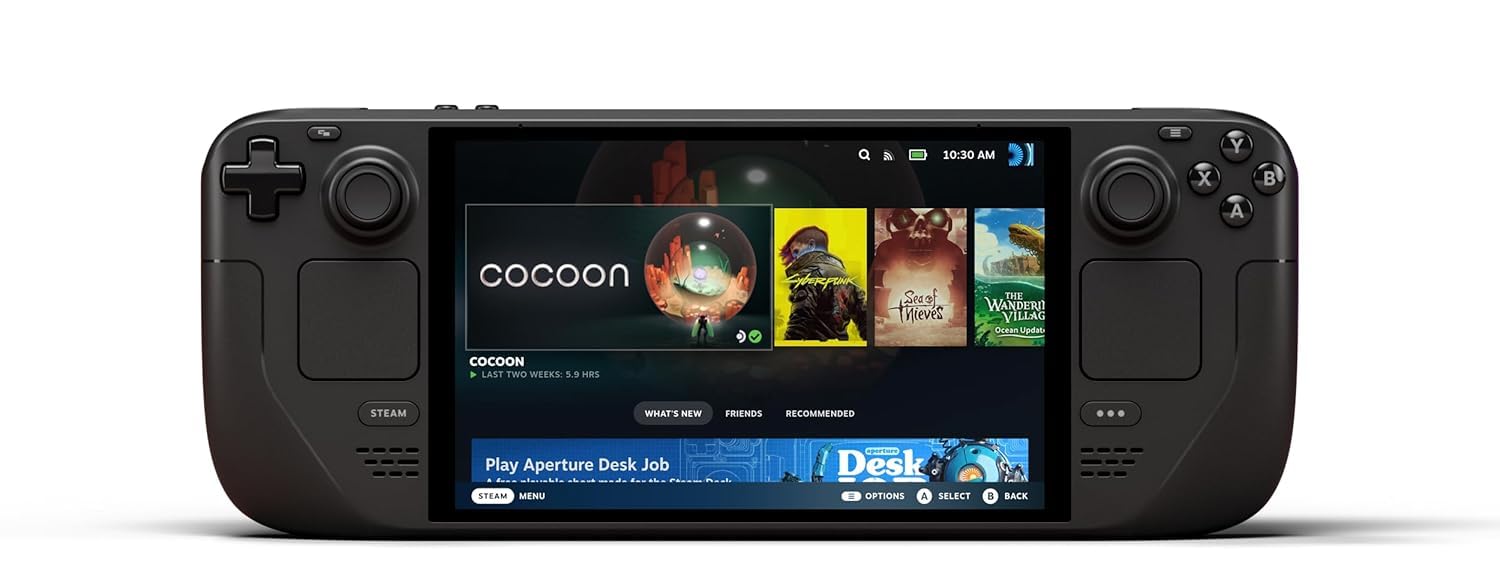
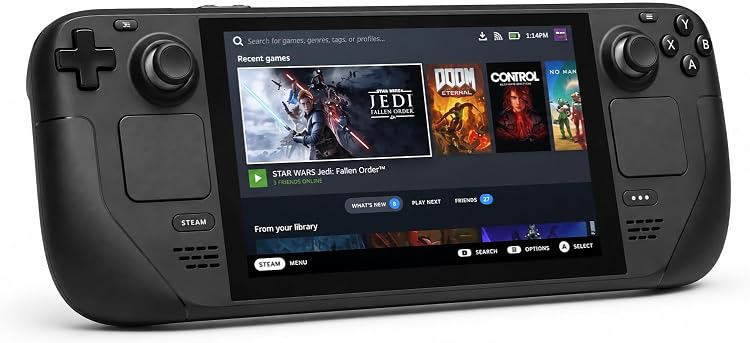
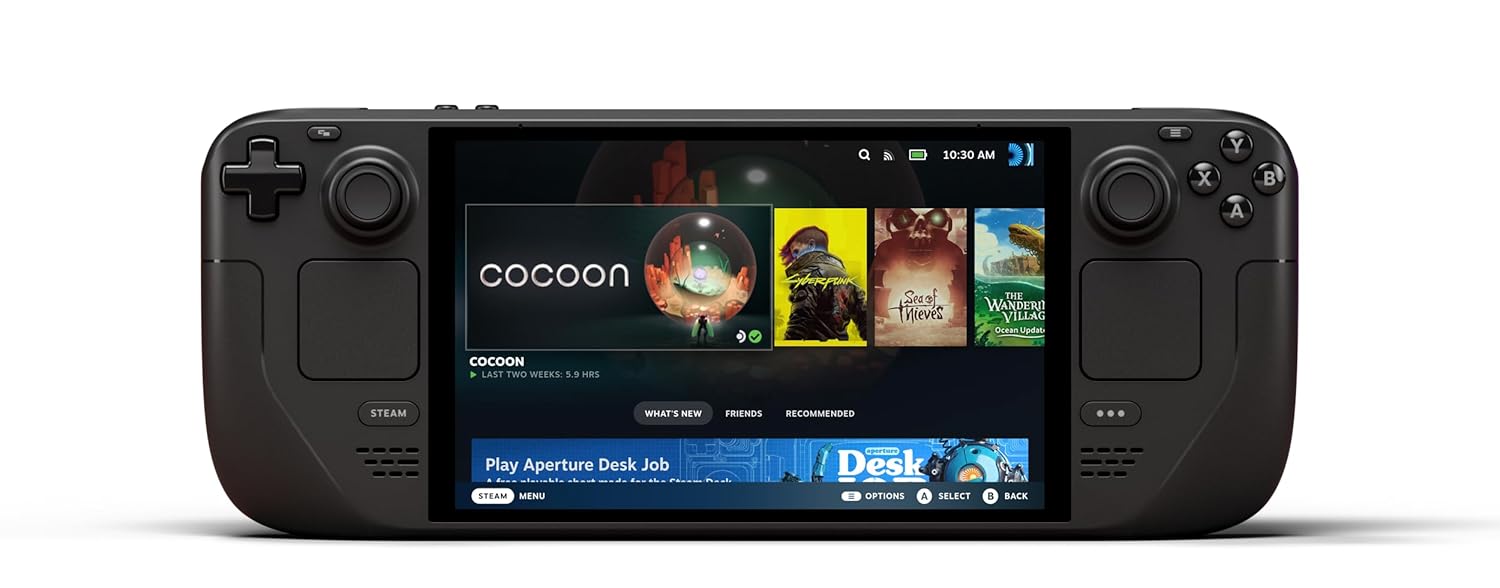
The linked listing is Steam Deck Oled 512 GB Handheld Gaming Console with 1280×800 HDR OLED display, Up to 90Hz Refresh Rate, Wi-Fi 6E, Bluetooth 5.3, With Carrying Case & 45W Power Supply. The listing condition is new. The color or finish field is Black. The model field on the listing is Steam Deck OLED 512GB. Match the full title, including storage, size, carrier lock, and renewed or pre-owned wording, before treating a similar photo as this product.
The listing describes it this way: 512 GB NVMe SSD: Fast storage for quicker game load times and space for larger game libraries. OLED Display: 1200×800 resolution with deep contrasts and vibrant colors for a captivating visual experience. Custom AMD APU: Power-efficient Zen 2 CPU and RDNA 2 GPU for desktop-level gaming performance.
Steam Deck OLED Black Friday Sale — Black Friday Deals 2026
The buttons on this page open these listings only: Steam Deck Oled 512 GB Handheld Gaming Console with 1280×800 HDR OLED display, Up to 90Hz (new). A similar model, a different storage size, a different carrier lock, or a new unit when the title says renewed is a different purchase.
The Steam Deck OLED is Valve’s revised handheld PC, not a sticker on the original Deck. The screen is a 7.4-inch HDR OLED at 1280 by 800 that can refresh at 90Hz. The battery is larger, at 50 watt-hours. Wi-Fi 6E replaces the older radio. Storage on the models Valve kept in the lineup is 512GB or 1TB of NVMe, and the 1TB unit adds an etched glass screen. The controls, the trackpads, and SteamOS are the same idea as the original. The chip family is the same custom AMD APU, with efficiency changes that help the new battery more than they rewrite game settings. A listing that still says 7-inch 60Hz LCD is the older Deck and belongs on a different page.
HDR and 90Hz are the reasons to pick this model when both are for sale. Supported games can use the higher refresh. Many games will still be played at 40 or 45 frames with a frame limit because that is how a handheld stays cool and lasts through a trip. The OLED panel makes those lower frame rates look cleaner and makes dark scenes look like a screen instead of a gray LCD. It does not turn every PC game into a locked 90. Expect to use the quick-access performance menu the same way Deck owners already do.
Battery life is the other half of the revision. The 50-watt-hour pack and the more efficient device mean a light game lasts longer than it did on the original 40-watt-hour Deck. A heavy new release at full power still wants a charger for a long day. Limit the frame rate and the wattage when the outlet is not nearby. That is a setting, not a defect. The OLED model is the one to choose if unplugged time is the complaint someone had with the LCD Deck.
The etched glass on the 1TB model cuts reflections. It is a real difference in a bright room and a small difference in a dark one. It is not a different computer. The 512GB model is the same handheld without that glass and with less internal storage. A microSD card still expands the library. Internal NVMe is the faster place for the games played most. Do not pay for a 1TB listing that is actually a 512GB unit with a card in the slot unless the title says that plainly.
SteamOS and Proton are unchanged as a concept. A large part of a Steam library runs. Multiplayer games with hostile anti-cheat often do not. Look up the specific game before a Black Friday hardware purchase is justified by that one title. Suspend and resume still matter more day to day than a benchmark. Desktop mode is there for tinkerers and is easy to ignore. The OLED Deck is a PC. It does not include a stack of console exclusives.
What the box contains should be read as a list. The handheld, a charger of the wattage Valve specifies, and a case on some bundles. A dock is separate unless the bundle names it. A carry case is worth having because the sticks face out. Third-party cases and docks are fine when they name the OLED Deck or the Deck family and the USB-C dock can pass power and video. A dock that cannot feed the charger the Deck expects will play on a TV while the battery falls.
Refurbished OLED units need a grade, a warranty, and a storage number. A photo of the glowing screen is not proof of the 1TB etched glass. Ask the title to say 512GB or 1TB. Dead pixels on an OLED are a return. Burn-in is unlikely in normal play and a reason to return a used unit that already shows a permanent HUD. Fan noise under load is normal. A grind at idle is not.
Weight and heat are the travel details. The OLED Deck is a bit lighter than the original and it is still a dense brick in a jacket pocket. The fan will spin up for a 3D game and go quiet for a visual novel. Play in a bed with the vents covered and it will get warmer and louder. That is airflow, not a fault in the panel. A USB-C hub for a hotel television should be one the buyer has already used, or it should be bought from a seller who takes it back. Video out is part of the Deck’s USB-C port. It is not a separate graphics mode with a different name.
Accounts and downloads are the first night. The library that appears is the library on the Steam account, filtered by what runs. A family that shares one login will fight over cloud saves. Separate accounts are the cleaner plan and they can share a library only under Steam’s own family rules, which the buyer should read rather than assume. Preloading a couple of installed games before a trip matters more than a benchmark screenshot. The OLED screen will not help a game that was never installed.
For Black Friday Deals 2026, write the variant down before the price. Screen: 7.4-inch HDR OLED, 90Hz. Storage: 512GB or 1TB. Etched glass: only on the 1TB. Seller and warranty: named. Then look at the live listing. The OLED Deck is the current Steam Deck to buy new. The original LCD is a different, older device. Do not let a sale graphic merge them.