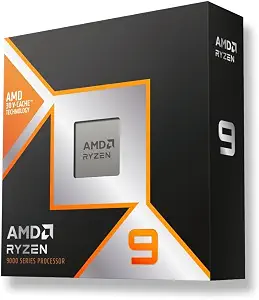
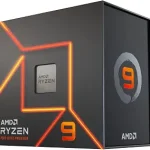
Choosing the AMD Ryzen 9 9900X3D for a Black Friday build starts with a practical question: what do you need your next processor to do, and which details of this listing matter to that plan? The product record identifies a 12-core processor with 24 concurrent threads, a 4.4 GHz processor speed, Socket AM5, 140 MB of installed cache, 12 MB of secondary cache, and a 120-watt specification. Those details give you a useful comparison framework, but they do not establish how the processor will perform in a particular workload or whether a complete system is a good fit. Use the Black Friday shopping window to check the exact item and offer, then consider its specifications alongside your motherboard plans, intended tasks, and broader system requirements.
This processor is worth considering if its listed configuration lines up with the kind of PC you want to plan. Its 12 cores and 24 concurrent threads give you concrete figures to compare with the demands you expect from your applications. The 4.4 GHz processor speed is another listed detail, but it should be read as a specification rather than a promise about results in a particular program. Likewise, the 140 MB installed cache and 12 MB secondary cache are separate entries; keep their labels intact instead of treating them as interchangeable. Socket AM5 and the 120-watt specification also belong in your system-planning notes. On Black Friday, keep this model on your shortlist only if those details suit your priorities, and confirm that the actual offer is for the exact processor you intend to buy.
Key specs
Processor speed
4.4 GHz
Socket
Socket AM5
Secondary cache
12 MB
Wattage
120 watts
Installed cache
140 MB
Concurrent threads
24
Processor cores
12
Begin with the jobs you expect the PC to do
Before comparing Black Friday offers, describe your usual workload in plain terms. You might be assembling a PC for one primary application, or you may want a machine for several kinds of work. The supplied listing gives you core and thread counts to use as comparison points: this processor has 12 cores and 24 concurrent threads. Those figures can help you decide whether the configuration belongs on your candidate list, but they cannot tell you how a specific application will behave. If you have a known workload, consult the requirements and guidance relevant to that software rather than treating the processor name as a substitute for that research.
A useful shortlist also accounts for what you do not need. If your plans are still unsettled, write down the tasks you expect to run and the system constraints you already know. Then ask whether this processor’s listed configuration deserves further investigation. This keeps Black Friday browsing focused on fit rather than urgency: a prominent offer is not a reason to buy a component that does not match your intended build.
Treat the speed entry as one part of the listing
The listing gives a processor speed of 4.4 GHz. Keep that value attached to its original label when comparing this model with another option; the number alone does not establish how either processor will handle your applications. Avoid reading it as a direct guarantee of everyday responsiveness, since the provided product details do not describe performance in particular tasks. Instead, note the figure and look for workload-specific information from sources you trust before making a decision.
During Black Friday shopping, this distinction can prevent a headline specification from carrying too much weight. Compare the complete configurations you are considering, and check that each offer refers to the model and variant you mean to evaluate. If speed is central to your decision, make it one item in a broader comparison that also includes your work, platform plans, and other relevant system requirements. The goal is to understand what the listing says—and to avoid assuming it answers questions it does not address.
Keep the two cache labels separate
Two cache figures appear in the supplied details: 140 MB of installed cache and 12 MB of secondary cache. Preserve both labels in your notes. The listing presents them as distinct specifications, so do not add them together, swap their names, or assume one explains the other. If cache is a factor in your processor comparison, use the same labeled specification for each candidate and seek further information when you need to understand how that detail relates to your intended applications.
This is especially helpful when several product pages use different specification fields or layouts. A Black Friday page may put some details in a title and others in a specification table, so slow down enough to confirm what each value describes. For this processor, retaining the original wording makes your comparison more reliable without turning a listed figure into an unsupported claim about speed or suitability. Pair these entries with the workload you identified, rather than choosing by the largest-looking number.
Map Socket AM5 to your build plan
Socket AM5 is the listed socket, making it an important item to verify against your motherboard plans. Do not assume that a socket label by itself settles every compatibility question for a complete build. Check the motherboard details and any requirements that apply to the exact processor and board combination you are considering. If you are planning a new system, confirm those details before placing the processor in your Black Friday cart. If you already have components in mind, compare their documented requirements rather than relying on a product title alone.
This check is also a chance to review the rest of the build as a whole. The product record supplies the socket, but it does not provide a full compatibility assessment for your individual parts. Keep a short list of questions to resolve, including whether your chosen board is appropriate for this processor and whether your other planned components meet their own requirements. That small bit of preparation makes the offer easier to evaluate and can help you avoid confusing an attractive listing with a confirmed fit.
Use Black Friday to inspect the offer, not just the headline
When a Black Friday offer catches your eye, verify that the product page identifies the AMD Ryzen 9 9900X3D and that the selected item is the version you intended to compare. Read the listing details rather than relying only on a short headline or a search result. Confirm the specifications you care about, including the listed 120-watt figure, and make sure the page has not shifted to a different product or selection while you were browsing. No offer should be treated as a promotion until the actual listing shows its current terms.
Then compare the offer with your own checklist: workload, Socket AM5 plans, core and thread configuration, cache labels, and the other requirements of your system. Decide in advance what information would change your mind, such as an unresolved board question or a product detail that does not match your notes. Black Friday can make comparison feel hurried, but a clear checklist gives you a reason to pause. If the exact item and your build plan do not line up, skip the offer and continue your search.
Make your Black Friday choice
The strongest reason to consider this processor is not the Black Friday label; it is whether its listed details fit the PC you are planning. Use the 12 cores, 24 concurrent threads, 4.4 GHz processor speed, separate cache entries, Socket AM5, and 120-watt specification as prompts for specific checks—not as guarantees about an unlisted system or workload. Before checkout, confirm the exact item and offer, resolve the platform questions that matter to your build, and compare the listing with your needs. If those checks support your choice, you can make a more deliberate Black Friday decision; if not, keep looking rather than letting the shopping event make the decision for you.