Dell 15.6 Laptop, FHD, Intel Core 3 100U, 8GB RAM, Windows 11 Home (ASIN B0H5X2GC1Y)
Best Windows Laptop Buying Guide — Black Friday Deals 2026
Choosing a Windows laptop during Black Friday is less about chasing a headline offer than identifying the configuration that suits your routine. This guide compares three options: a Surface with a Snapdragon X2 Elite processor, an HP with a large OLED display, and a Dell with a 15.6-inch Full HD screen and 8 GB of memory. Start by deciding how much screen space you want, what you expect to run, and how much storage you need. Then check the exact model and configuration shown in the Black Friday offer before comparing it with the alternatives.
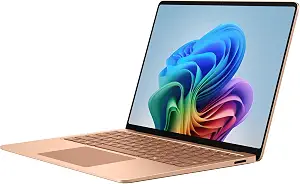
Best Overall is an editorial pick among the laptops in this guide, not a claim of measured superiority. The Microsoft Surface Laptop (2026) pairs a 13.8 inches display with a 2304 x 1536 resolution, giving this option a specific place to start if screen size and resolution both matter to your decision. Its Snapdragon X2 Elite processor, 16 GB of installed memory and 512 GB of storage round out the listed configuration. It runs Windows 11 Home.
Think about the mix of tasks you expect to handle before treating this as your leading choice. The listed memory and storage give you concrete figures to compare with the requirements of your own applications and the amount of content you plan to keep locally. The processor is another reason to check your software needs against the product details rather than assume a processor name alone settles the question. Bluetooth 5.4 is the listed wireless connectivity detail; compare it with the devices you expect to connect.
During Black Friday, compare the offer against this exact Surface configuration, not a similarly named laptop with different components. Confirm the model, display, processor, memory, storage and operating system on the product listing before deciding that an offer meets your needs. If this configuration lines up with your application requirements and your preferred screen, it may be a useful shortlist anchor. If you need more display area or are prioritizing a different feature, compare it with the HP and Dell below rather than choosing on the Best Overall label alone.
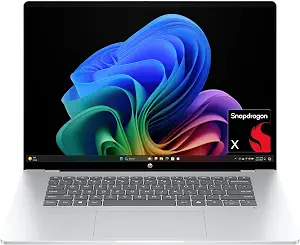
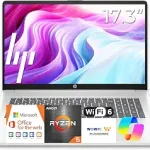
Best for a large OLED screen is a label grounded in the HP OmniBook 5’s listed display: 16″ diagonal, 2K (1920 x 1200), OLED. It offers a different screen proposition from the Surface and Dell in this guide, so consider whether that display size and panel type fit the way you work or view content. The label is an editorial distinction among these three products, not a measured ranking or a guarantee that the display will suit every viewer.
The HP’s listed processor is Snapdragon X X1-26-100, specified as up to 2.97 GHz with 8 cores. It has 16 GB LPDDR5x-8448 MT/s onboard memory and a 512 GB PCIe Gen4 NVMe M.2 SSD. Those details help make a practical comparison with the other configurations: check your applications’ requirements, decide how much local storage you expect to use, and consider whether the onboard memory configuration fits your plans. The listing also specifies Wi-Fi 6E (2×2) Dual Band Simultaneous (DBS) and Bluetooth 5.3.
For calls, the listed hardware includes an HP True Vision 1080p FHD IR camera with temporal noise reduction and integrated dual array digital microphones. Check those specifics against the calling setup you use, rather than assuming every laptop listing describes camera and microphone features in the same way. As Black Friday offers appear, verify that the listing still describes this HP configuration, including its OLED screen, processor, memory, storage and wireless details. If the large OLED screen is your priority, compare the exact offer with the value you place on those other components before making a decision.
Key specs
Display
16″ diagonal, 2K (1920 x 1200), OLED
Processor
Snapdragon X X1-26-100 (up to 2.97 GHz, 8 cores)
Memory
16 GB LPDDR5x-8448 MT/s (onboard)
Storage
512 GB PCIe Gen4 NVMe M.2 SSD
Wireless
Wi-Fi 6E (2×2) Dual Band Simultaneous (DBS) and Bluetooth 5.3 wireless card
Camera
HP True Vision 1080p FHD IR camera with temporal noise reduction and integrated dual array digital microphones
Dell 15.6 Laptop, FHD, Intel Core 3 100U, 8GB RAM, Windows 11 Home
Dell 15.6 Laptop, FHD, Intel Core 3 100U, 8GB RAM, Windows 11 Home (ASIN B0H5X2GC1Y)
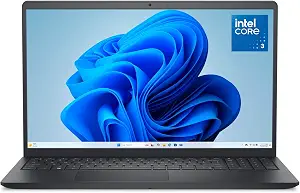
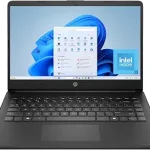
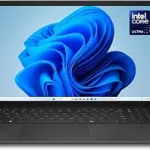
Best Budget is an editorial label for the Dell 15.6 Laptop among the options covered here; it does not establish that it has the lowest market price or the best performance. Its listed configuration includes a 15.6 inches display with 1920 x 1080 pixels, an Intel Core 3 100U processor, 8 GB of memory and 512 GB of storage. It runs Windows 11 Home. These details make it possible to compare the Dell against your own requirements without relying on a general label to make the choice for you.
The 8 GB memory figure is a useful prompt to check the requirements of the programs you expect to use and how you tend to work with them. The same goes for the Intel Core 3 100U: compare the listed processor with the software you need rather than making assumptions from the name. The 512 GB storage figure lets you consider whether the space matches your local file plans. Its 1920 x 1080 resolution and 15.6 inches display may also be a sensible match if that screen format is what you want; weigh it against the Surface’s listed resolution and the HP’s OLED panel.
For carrying and wireless use, the Dell listing gives a weight of 3.6 pounds, a battery capacity of 41 watt-hours and Wi-Fi 6. Treat those as points to consider alongside your own routine, not as a promise about battery runtime or suitability for a particular trip. During Black Friday, verify the exact Dell model and listed configuration on the offer page. Compare its processor, memory, storage, display and Windows 11 Home configuration with your needs, then weigh the listed weight and battery capacity if those details matter in your day. The Best Budget label is a starting point for that comparison, not a substitute for checking the offer.
Key specs
Display
15.6 inches
Resolution
1920 x 1080 pixels
Memory
8 GB
Storage
512 GB
Operating system
Windows 11 Home
Wireless connectivity
Wi-Fi 6
Weight
3.6 pounds
Battery capacity
41 watt-hours
Make the shortlist from your actual workload
Before comparing a Windows laptop offer, write down the applications and everyday tasks you expect the machine to handle. That turns a vague wish for a “fast” laptop into a more useful check: do your programs have stated processor or memory requirements, and does the configuration meet them? The Surface lists a Snapdragon X2 Elite processor and 16 GB of memory; the HP lists a Snapdragon X X1-26-100 processor and 16 GB LPDDR5x-8448 MT/s onboard memory; the Dell lists an Intel Core 3 100U processor and 8 GB of memory. These are distinct configurations, but the facts here do not establish how they perform against one another.
Use the requirements of your own software as the deciding reference. If a program has a specific system requirement, compare it with the model details rather than assuming a processor family or memory figure answers every compatibility question. For any application you depend on, verify its requirements for the exact laptop you are considering. That is especially worthwhile during Black Friday, when an offer’s headline can distract from details that matter to your intended use. Keep the model name and its listed processor and memory together as you compare; do not assume a similar name means an identical configuration.
Choose the display around where you spend time
Screen preference can quickly narrow a shortlist. The Surface lists a 13.8 inches display with 2304 x 1536 resolution. The Dell pairs a 15.6 inches display with 1920 x 1080 pixels. The HP’s display is listed as 16″ diagonal, 2K (1920 x 1200), OLED. Those descriptions provide a direct comparison of the screen details, but they do not tell you which will feel most comfortable in your room, at your desk or during a particular task. Think about the amount of screen area you want and the resolutions you prefer, then compare those preferences with the listing.
The HP is the option to examine if an OLED panel is central to your search; its label, Best for a large OLED screen, reflects that provided feature. The Surface presents a different resolution and display size, while the Dell provides a Full HD resolution in the listing. Avoid treating the largest stated display as automatically best for your routine: portability, viewing habits and the type of work you do may change what feels appropriate. When reviewing a Black Friday listing, make sure the display details belong to the exact model and configuration in the offer, not another product variation.
Treat memory and storage as separate decisions
Memory and storage answer different planning questions. Memory is one of the configuration details to compare with your applications and working habits; storage is the listed capacity to consider against the files you intend to keep on the laptop. The Surface lists 16 GB of installed memory and 512 GB of storage. The HP lists 16 GB LPDDR5x-8448 MT/s onboard memory and a 512 GB PCIe Gen4 NVMe M.2 SSD. The Dell lists 8 GB of memory and 512 GB of storage. Use the full descriptions when you compare rather than collapsing these details into a single notion of capacity.
Think through your own file routine: what you keep locally, what you remove, and whether your expected use makes the listed storage figure a comfortable fit. This guide does not establish how much space any particular application or personal library will consume, so estimate from your current needs. Likewise, compare memory with the requirements for the tasks you expect to run. A Black Friday offer is worth considering only if its exact memory and storage configuration matches your plan. Check both details on the product page; one should not stand in for the other.
Check wireless, calls and carrying details
Connectivity can matter when a laptop has to fit into an existing setup. The Surface lists Bluetooth 5.4. The HP lists Wi-Fi 6E (2×2) Dual Band Simultaneous (DBS) and Bluetooth 5.3. The Dell lists Wi-Fi 6. Compare those specifications with the wireless equipment and network setup you expect to use, and confirm any requirements that matter to you. The listed details are not a guarantee that a particular connection will suit every environment, so use them as a checklist against your own setup.
If video calls are part of your routine, the HP listing specifically identifies an HP True Vision 1080p FHD IR camera with temporal noise reduction and integrated dual array digital microphones. The other records here do not provide camera details to compare, so do not infer that they lack a feature. Consider whether the stated HP camera and microphone information addresses what you want to verify. For carrying questions, the Dell listing gives a weight of 3.6 pounds and battery capacity of 41 watt-hours. Those figures may inform your decision, but they do not establish how long the laptop will run away from power. Check the configuration details again during Black Friday.
Compare the Black Friday offer line by line
A Black Friday banner does not tell you whether a laptop is the right configuration for you. Open the product details and match the name and specifications to your shortlist: display, processor, memory, storage, operating system and any connectivity or camera detail that matters to your choice. For the Surface, verify the Snapdragon X2 Elite configuration with 16 GB memory and 512 GB storage. For the HP, check the OLED display and the listed processor, onboard memory and SSD. For the Dell, confirm the Intel Core 3 100U, 8 GB memory and 512 GB storage.
Then compare the exact offer against your own priorities, rather than comparing only product names or promotional wording. If two listings look similar, check whether their full model and configuration details actually match. No price, discount, stock status or active promotion is established here, so use the offer page for current purchase information and make your decision from the details shown there. During Black Friday, take a moment to confirm the selected variant before checkout. The useful question is not simply whether a laptop is presented as a deal, but whether the specific product and configuration meet the requirements you set.
Make your Black Friday choice
A practical Windows laptop choice begins with your software needs, then narrows by display preference, memory, storage and the details of your setup. The Surface, HP and Dell each offer a different set of listed specifications, so the best fit depends on which of those details matter most to you. During Black Friday, verify the exact model and configuration on the offer page before deciding. Treat the editorial labels as shortlist cues, not proof of performance or value, and choose the laptop whose stated features match your own requirements.