Best Printer Buying Guide — Black Friday Deals 2026
What do you print often enough that the printer’s everyday workflow matters more than a headline feature? A home with occasional color pages has different priorities from a desk that turns out long monochrome documents or a household that wants refillable ink tanks. This guide compares three all-in-one options by the jobs their listed features support: the HP DeskJet 2923, Epson EcoTank ET-2900, and Brother DCP-L2640DW. For Black Friday, treat each listing as a specific model and configuration rather than assuming a sale changes what the machine can do. Start with color needs, supply approach, document handling, and connection options; then decide which exact offer suits your routine.
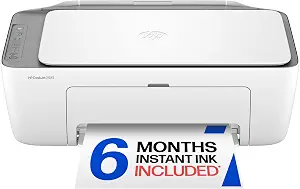
HP DeskJet 2923 Color Inkjet Printer (ASIN B0GMW9XT9X)
Best Budget is the editorial label for the HP DeskJet 2923, positioned here for shoppers looking for color printing alongside copy and scan functions. The label is a buying-guide choice among these three printers, not a claim about its sale price or a market-wide ranking. It has a 60-sheet input tray and supports mobile and wireless printing, so consider whether that combination fits the way you expect to send jobs and load paper. For Black Friday, check the exact DeskJet 2923 listing rather than assuming the label means a particular discount or configuration.
The printer’s stated speeds are up to 7.5 ppm in black and 5.5 ppm in color. Those figures can help you judge whether its pace suits occasional household documents, school-related pages, or small color jobs; they should not be read as a guarantee for every document. The maximum color print resolution is up to 4800 x 1200 optimized dpi, with an important qualification: this applies when printing from a computer on selected HP photo papers and with 1200 input dpi. If photo-paper output is relevant to you, retain those conditions when comparing the spec rather than treating it as an unconditional result.
Connectivity options include Apple AirPrint, USB, Wi-Fi, wireless direct printing, and Mopria. Duplexing is manual, with driver support provided, so consider whether you are comfortable handling a two-sided job manually rather than expecting automatic duplexing. Its listed dimensions are 11.97″D x 16.73″W x 6.06″H; compare that exact format with the space you can allocate before ordering. The HP is a practical candidate when color, copy, scan, mobile printing, and a modest input tray matter more than the other models’ listed high-volume or document-feeding features. During Black Friday, weigh those needs against the exact offer, not against an assumed bargain.
Key specs
Functions
Color print, copy, scan, and a 60-sheet input tray, plus mobile and wireless printing
Print speed
Up to 7.5 ppm black, 5.5 ppm color
Connectivity
Apple AirPrint; USB; Wireless (Wi-Fi); Wireless direct printing; Mopria
Duplex
Manual (driver support provided)
Maximum color print resolution
Up to 4800 x 1200 optimized dpi color (when printing from a computer on selected HP photo papers and 1200 input dpi)
Dimensions
11.97″D x 16.73″W x 6.06″H
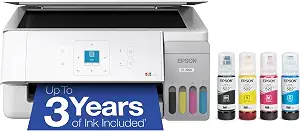
Epson EcoTank ET-2900 Wireless All-in-One Color Supertank Printer
Epson EcoTank ET-2900 Wireless All-in-One Color Supertank Printer (ASIN B0GSSGLV8D)
Best Overall is an editorial fit for shoppers who want a color all-in-one with a tank-based ink approach and broad stated included-ink yields. The Epson EcoTank ET-2900 includes enough ink to print up to 3,600 pages in black or 6,500 in color, and the listing says its ink supply can last up to 3 years. Those are the stated limits, not a promise about how long ink will last for every household; actual needs depend on what and how often you print. For Black Friday, this makes the ET-2900 worth considering if the included supply is central to your purchase decision.
Its supersized ink tanks use uniquely keyed EcoFit bottles, which the listing describes as making refilling simple. That refill system may suit someone who prefers bottles and tanks to evaluating a printer primarily by its initial supply. The printer also has Wi-Fi, a 100-sheet paper tray, and a 1.44-inch color display. Those details help you assess the day-to-day setup: consider wireless use, how much paper you want loaded, and whether the display is useful in your intended location. A high-resolution flatbed scanner adds a stated scanning feature for mixed print-and-scan routines.
The listed ISO print speeds are 11 black and 6 color ppm. Use those figures as part of a fit check, not as a guarantee that every job will finish at that pace. If your workload is mostly color, compare the stated color speed with your expectations; if ink supply is the deciding factor, keep the included yield and refill format in view. Black Friday listings can make it tempting to focus on the offer headline, but first confirm the ET-2900 model and that the listing describes the configuration you want. Choose this Best Overall option when its tank system, stated yield, scanner, tray, and Wi-Fi align with your recurring jobs.
Key specs
Ink supply
Epson EcoTank includes enough ink to last up to 3 years
Included ink yield
WORRY-FREE PRINTING — Epson EcoTank comes with enough ink to print up to 3,600 pages black/6,500 color
Ink refill system
Supersized ink tanks and uniquely keyed EcoFit bottles make refilling ink simple
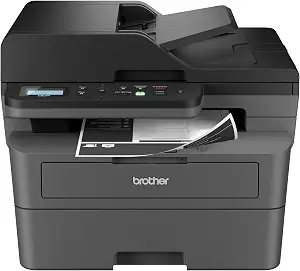
Best for Fast Document Workflows is the editorial fit for the Brother DCP-L2640DW, whose listed print speed reaches up to 36 ppm. It is a wireless compact monochrome multi-function printer, making it the option to examine when your routine centers on black-and-white documents rather than color output. The speed is a stated maximum, not a guarantee for every job, but it gives shoppers a concrete feature to compare with their document workload. For Black Friday, check that the listing is for the DCP-L2640DW and decide whether monochrome printing fits the pages you actually expect to produce.
Document handling is another reason this model may suit a busy desk: it has a 50-page auto document feeder and Auto-Duplex. The feeder is relevant when you routinely work with multi-page originals, while automatic duplexing can handle two-sided printing without the manual page-turning approach listed for the HP. These features serve different stages of a document task, so think about whether your repeat work involves feeding originals, printing on both sides, or both. Its maximum media size is 8.5 x 14 inch, a useful boundary to check against the paper sizes your jobs require.
The Brother offers built-in dual-band wireless at 2.4GHz / 5GHz and Ethernet, giving you both wireless and wired connection options. Compatible toner models listed are TN830 and TN830XL, so verify that the selected listing and your supply plans align with those designations. The Best for Fast Document Workflows label reflects the listed speed and document-handling features, not a measured comparison or promise of results. If color printing is a priority, compare this monochrome model with the color-capable HP and Epson instead. Black Friday is a useful time to assess the whole fit: model, toner compatibility, connections, media size, feeder, and duplexing—not just the offer wording.
Key specs
Print speed
print speeds up to 36 ppm(2)
Document feeder
A 50-page auto document feeder(4)
Wireless
built-in dual-band wireless (2.4GHz / 5GHz)
Wired connections
Ethernet
Duplex
Auto-Duplex
Maximum media size
8.5 x 14 inch
Compatible toner
TN830, TN830XL
Choose by the pages that recur
Sort your usual jobs into color pages, black-only documents, and mixed tasks before comparing printers. That distinction immediately clarifies the tradeoffs here: the HP and Epson are color inkjet models, while the Brother is a monochrome multi-function printer. If color is a regular requirement, focus on the two color models and compare their other listed features. If your routine is predominantly monochrome documents, the Brother’s stated maximum speed and document handling may deserve closer attention. The point is not to predict a single winner for every kind of work, but to identify which capabilities you will use repeatedly.
Next, consider how often pages arrive in batches and whether you scan or copy as part of the same routine. The HP lists print, copy, and scan functions; the Epson lists a high-resolution flatbed scanner; and the Brother lists a 50-page auto document feeder. These are different details, so match each one to the task you actually do rather than treating them as interchangeable. Black Friday can put several appealing descriptions side by side, but a printer is a better fit when its specific workflow matches your recurring jobs. Write down the must-haves first, then use the remaining features to break a tie.
Plan for the supply format you prefer
The Epson’s tank-and-bottle system is the clearest supply detail among these listings. It has supersized ink tanks and uniquely keyed EcoFit bottles, with included ink stated to yield up to 3,600 black pages or 6,500 color pages; the listing also says the supply can last up to 3 years. Keep both the yield and the qualification in perspective: they are product claims, not a tailored estimate of your own usage. If you print regularly, consider whether the bottle refill format and stated included supply are priorities for you.
The HP listing identifies a color inkjet printer but does not provide a cartridge yield in the facts here, so do not use an assumed supply estimate to compare it with the Epson. The Brother lists TN830 and TN830XL as compatible toner. Check the precise model designation when researching supplies, and decide whether the listed toner options make sense for your plans. For Black Friday, compare the printer offer together with the supply approach you intend to use. Avoid treating an attractive headline as a complete ownership-cost calculation when the listing facts do not provide every cost or usage detail. Choose based on the supported information and your own printing pattern.
Match page handling to your routine
Paper handling can shape everyday convenience even when two printers serve similar jobs. The HP has a 60-sheet input tray, and the Epson has a 100-sheet paper tray. If you prefer to load more paper at once, those stated capacities give you a direct comparison; they do not establish how frequently you will need to refill, since that depends on your usage. The Brother’s listed facts instead emphasize a 50-page auto document feeder and a maximum media size of 8.5 x 14 inch. Ask whether your priority is holding paper for print jobs, feeding originals, or accommodating a particular page size.
Two-sided output is another practical checkpoint. The HP specifies manual duplexing with driver support, while the Brother specifies Auto-Duplex. If you often want pages printed on both sides, account for the different handling described in those listings. The supplied Epson facts do not state a duplex mode, so verify the exact listing if that feature matters to you rather than assuming one way or the other. During Black Friday comparisons, keep paper capacity, feeder design, media size, and duplex method in separate columns. A printer that matches the way you handle pages can be a more useful choice than one selected from a single headline specification.
Check how each option joins your setup
Connection needs depend on the devices and placement involved in your routine. The HP lists Apple AirPrint, USB, Wi-Fi, wireless direct printing, and Mopria; the Epson lists Wi-Fi; and the Brother lists dual-band wireless at 2.4GHz / 5GHz plus Ethernet. These options are not identical, so check the exact connection you need before choosing. For example, if wired networking is a requirement, the Brother’s listed Ethernet connection is a relevant fact. If you depend on a particular mobile-printing route, confirm that it appears in the selected model’s listing.
Also compare the space available with the printer’s documented dimensions when they are supplied. The HP’s dimensions are 11.97″D x 16.73″W x 6.06″H. No dimensions are provided here for the other two models, so look them up in their exact listings if placement is a deciding factor. Consider access to the paper tray, scanner, and any refill area as part of your setup, without assuming a particular layout from the listed facts alone. Black Friday shopping can encourage quick decisions; taking a moment to verify connection and placement requirements helps ensure the model suits your actual room and devices.
Evaluate the exact Black Friday listing
Treat the Black Friday offer as a specific listing to verify, not as evidence that every configuration or feature is included. Confirm the full model name: HP DeskJet 2923, Epson EcoTank ET-2900, or Brother DCP-L2640DW. Then check that the described printer matches the model you intended to compare. This is especially useful when several products share a brand family or similar wording. The product facts here do not establish an active promotion, a particular price, or stock status, so make your purchase decision from the listing available to you rather than an assumed deal.
After confirming the model, compare the features that affect your own work: color capability, stated speed, paper handling, scanner or feeder details, duplex method, connection choices, and ink or toner format. Keep qualifications attached to the claims, including the HP’s conditional maximum color resolution and the Epson’s stated included-ink yields. Check any feature that is essential but not specified in the facts presented here directly on the exact listing. A Black Friday offer is relevant only if the model and configuration meet your needs. This final pass keeps the decision grounded in what is actually being offered, without relying on a headline or a guess about savings.
Use a short final-fit checklist
Before selecting one, answer a few practical questions in order. Do you need color, or is monochrome enough? Will you regularly scan, copy, or feed multi-page originals? Is automatic duplexing important, or is manual handling acceptable? Which connection method must be supported? Finally, does the listed paper capacity, media size, and supply approach fit your routine? This sequence makes the differences easier to judge: HP emphasizes color all-in-one functions and multiple connection methods; Epson combines color printing with a tank system and stated included-ink yield; Brother emphasizes monochrome document workflow features.
Use the answers to narrow your shortlist, then revisit the exact Black Friday listing for model identity and any must-have detail not covered in this guide. Do not let one appealing specification override a mismatch elsewhere in your workflow. A fast stated speed will not answer a color requirement, and a large stated ink yield will not answer a connection requirement. Black Friday is the occasion to compare offers, but the purchase itself should still be based on everyday fit. If the key facts line up, you have a reasoned choice; if an essential detail remains unclear, verify it before ordering.
Make your Black Friday choice
The right printer is the one whose listed features answer your repeated needs: color and mobile-printing options, tank-based ink with stated yield, or monochrome speed with an auto document feeder and automatic duplexing. Use the Best Overall, Best Budget, and Best for Fast Document Workflows labels as starting points, not substitutes for checking your requirements. Before completing a Black Friday purchase, confirm the exact model and configuration, the connections and paper handling you need, and the relevant ink or toner details. Compare the actual offer without assuming a discount or feature that the listing does not state. That checklist is a more reliable path to a suitable printer than choosing by a headline alone.