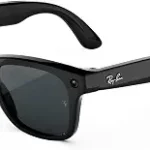
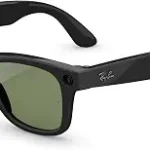
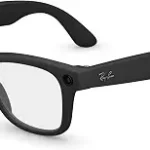
Oakley Meta Vanguard, Black Prizm™ Black (ASIN B0GQD6SF83)
Best Meta Ai Glasses Buying Guide — Black Friday Deals 2026
Meta AI glasses can bring camera and AI features into a wearable format, but the listed models emphasize different practical details. The Ray-Ban Wayfarer options list camera and video specifications, while the Oakley Meta Vanguard also calls out open-ear audio, Garmin compatibility and charging-case capacity. This guide treats Best Overall and Best Budget as editorial labels for these featured choices, not as test results or claims about the wider market. During Black Friday, compare the exact model, frame and lens variant shown in the offer; a promotion is not confirmed here. Start with the feature you expect to use, then check that the listing you are considering matches it.
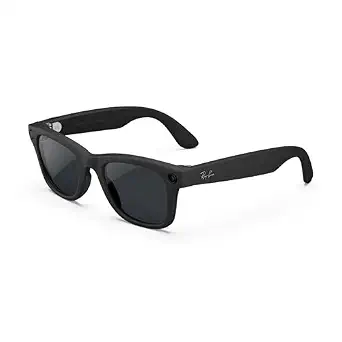
Meta Ray-Ban (Gen 2) Wayfarer AI Glasses, Matte Black, Transitions® Grey lenses
Meta Ray-Ban (Gen 2) Wayfarer AI Glasses, Matte Black, Transitions® Grey lenses (ASIN B0FLYJM9DC)
Best Overall is an editorial fit for shoppers who want a Wayfarer-style pair with clearly specified camera, video, lens and battery details in one listing. The Meta Ray-Ban (Gen 2) has a 12MP camera and records 3K UHD video. Those specifications describe its capture options, but they do not establish how a particular clip will look in every setting. If recording is a central reason for choosing AI glasses, compare these stated details with the kinds of moments you want to capture rather than assuming a resolution alone settles the choice.
This version is named with Transitions® Grey lenses, and its lens type is listed as photochromic; the lens material is polycarbonate. Those details help distinguish this listing from other frame or lens variants that may appear during Black Friday browsing. They do not provide a full account of how the lenses will suit your vision or preferences. Check the product name and variant carefully, especially if you are comparing an offer that displays a different lens description. The dimensions are listed as an arm length of 15.6 centimeters, bridge width of 22 millimeters and lens width of 50 millimeters. Use those exact figures as points to check against your own frame preferences, not as a guarantee of fit.
Battery life is stated as up to 8 hours on a full charge with moderate use. Keep both qualifications in mind when planning a day: the figure is an upper limit, and the description ties it to moderate use. It is useful as a planning clue, not a promise that every routine will produce the same runtime. This is also why the Best Overall label should be read as a match to a balanced set of listed details, not proof of measured superiority. For Black Friday, compare the exact offer and configuration, then decide whether the photochromic lens description, capture specifications and qualified battery claim line up with your priorities.
Key specs
Camera
12MP Camera
Video
3K UHD Video
Lens type
Lens Type Photochromic
Lens material
Lens Material Type Polycarbonate
Arm length
Arm Length 15.6 centimeters
Bridge width
Bridge Width 22 millimeters
Lens width
Lens Width 50 millimeters
Battery life
On a full charge, AI glasses can last up to 8 hours with moderate use
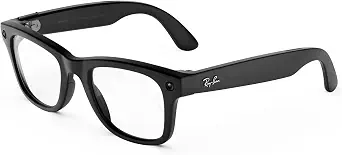
Ray-Ban Meta (Gen 3), Wayfarer AI Glasses (ASIN B0HBQ19GSB)
Best Budget is the supplied editorial label for the Ray-Ban Meta (Gen 3) Wayfarer, but the records provide no prices or sale information. Treat the label as a way to organize this guide, not a claim that this listing has the lowest price or represents a confirmed Black Friday deal. Its listed details give shoppers concrete points to verify: the model number is 0RW4011, the department is unisex, and the glasses are described as coming with Meta AI. If an offer catches your eye, make sure the listing identifies this model rather than relying on a similar product name alone.
The camera is specified as 12 MP, with 3K Ultra HD video recording. The listing says this can be used to capture a shot hands-free. That wording may be relevant if you hope to record without holding a camera, but it does not tell you how the glasses will perform in every scene or what your footage will look like. Think about whether hands-free capture is useful in your everyday plans, then assess the listed camera and video details as specifications rather than as guarantees of a particular result.
An action button can subtly trigger Meta AI or be customized for instant shortcuts to favorite features, as described in the listing. That gives this model a specific interaction detail to weigh alongside its capture specifications. The description does not say which shortcuts a particular shopper will prefer, so consider whether a physical button and customizable access sound relevant to your routine. For Black Friday comparison, inspect the exact model and variant attached to the offer, and verify that the action-button and Meta AI details belong to that product page. The Best Budget label can help frame a shortlist, but the actual offer and configuration still need to be evaluated on their own.
Key specs
Model number
0RW4011
Department
Unisex
AI
with Meta AI
Camera and video
With the 12 MP camera and 3K Ultra HD video recording, you can capture the perfect shot, hands-free.
Action button
With the action button, you can subtly trigger Meta AI or customize it for instant shortcuts to your favorite features.
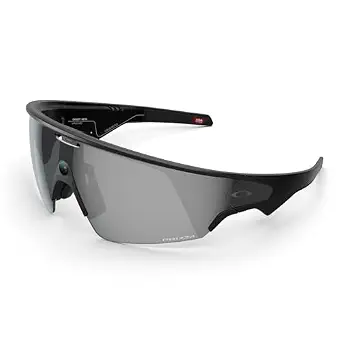
Oakley Meta Vanguard, Black Prizm™ Black (ASIN B0GQD6SF83)
Best for on-the-go charging is the editorial label for the Oakley Meta Vanguard, based on its stated battery and charging-case details. A fully charged pair is listed as lasting up to 9 hours of typical use, and the charging case provides an additional 36 hours of charging on the go. Keep the wording intact: the glasses figure is an upper limit qualified by typical use, while the case figure describes additional charging. These figures can help you think through access to power during a busy day, but they do not predict an individual routine’s runtime.
For capture, the listing specifies a centered, ultra-wide 12 MP resolution camera with a 122° field of view. Consider whether that stated camera arrangement and field of view are relevant to the moments you want to record; the specification does not promise a particular composition or outcome. The glasses also list open-ear audio and Bluetooth. Those are useful details to check against your intended use, without assuming anything about sound quality or other connection behavior that is not specified here.
Garmin compatibility is listed, with a note that a compatible Garmin device is sold separately. That distinction matters when comparing the complete setup you may want, since compatibility does not mean that the separate device is included. During Black Friday, verify the exact Oakley Meta Vanguard listing and whether the offer describes the glasses, charging case and any separate device accurately. The Best for on-the-go charging label reflects the provided case and battery information, not a guarantee that this model is best for every traveler or schedule. If charging access is your main concern, use the two separate figures to plan questions and compare the exact offer rather than treating them as a single runtime promise.
Key specs
Battery life
A fully charged pair of Oakley Meta Vanguard glasses can last up to 9 hours of typical use.
Charging case
the charging case provides an additional 36 hours of charging on the go.
Camera
centered, ultra-wide 12 MP resolution camera with a 122° field of view.
Audio
open-ear audio and bluetooth
Garmin compatibility
Compatible Garmin device sold separately.
Choose a capture setup for the moments you expect
A camera specification is most useful when connected to a real task. The Gen 2 Wayfarer lists a 12MP camera and 3K UHD video, and the Gen 3 Wayfarer lists a 12 MP camera with 3K Ultra HD video recording. Those listed details make the two Ray-Ban options straightforward to compare on paper, but they do not establish which one will suit a particular scene better. The Vanguard instead specifies a centered, ultra-wide 12 MP camera with a 122° field of view. That gives it a distinct camera description to consider if the stated field of view is relevant to your planned recordings.
Ask what you want to capture: a brief everyday moment, a hands-free shot, or a scene where the camera’s stated field of view matters to your decision. The Gen 3 listing explicitly describes hands-free capture, while the Gen 2 listing provides camera and video specifications without that same wording. Treat this as a difference in the provided descriptions, not proof that a feature is unavailable elsewhere. For Black Friday, compare the exact product page and variant, and do not let a short deal headline substitute for checking the specifications attached to the item. Resolution and field-of-view wording are useful evidence, but they cannot answer every question about the result you will get.
Match lens details and frame measurements to your priorities
The Gen 2 Wayfarer listing provides the most specific lens and sizing information among these records: Transitions® Grey lenses, photochromic lens type, polycarbonate lens material, arm length of 15.6 centimeters, bridge width of 22 millimeters and lens width of 50 millimeters. Use these as identifiers and comparison points, especially when more than one variant appears in Black Friday search results. The figures retain the listing’s exact formats; they are not a substitute for trying on a frame or checking what feels comfortable to you.
The Gen 3 product name identifies a Wayfarer AI Glasses model, but the supplied details do not specify a lens type, lens material or frame dimensions. The Vanguard name and Black Prizm™ Black description identify its listed product, but the provided details do not include frame measurements. Missing details should prompt a closer look at the exact listing if they matter to your choice; they should not be read as proof that a product lacks a feature. Compare like with like: check the frame and lens variant named in the offer before weighing its terms. A product image or broad family name alone may not answer which configuration the page refers to.
Plan around the kind of power information provided
Battery figures are not interchangeable unless their wording is comparable. For the Gen 2 Wayfarer, the stated claim is up to 8 hours on a full charge with moderate use. For the Vanguard, the claim is up to 9 hours of typical use, and its case provides an additional 36 hours of charging on the go. The qualifying phrases differ, so avoid turning these into a direct runtime contest or assuming your own usage will match either upper limit. The case information is a separate consideration rather than an extension that guarantees a single uninterrupted period of use.
Think through where charging fits into your ordinary day: whether you have access to the case, whether you plan to be away from a charging point, and how much weight you place on a stated upper limit. The provided details do not give a battery-life figure for the Gen 3 Wayfarer, so do not infer one from the other Ray-Ban model. During Black Friday, verify which model the battery wording applies to and whether the case details appear with the exact Vanguard offer. These checks keep a useful specification from turning into an unsupported expectation about your personal runtime.
Consider how you want to interact and connect
The Gen 3 Wayfarer listing says its action button can subtly trigger Meta AI or be customized for instant shortcuts to favorite features. It also describes the glasses as coming with Meta AI. If quick access is part of your decision, those are concrete details to compare against your habits. They do not specify which shortcuts will matter to you, so consider the kind of interaction you would actually want before treating the button as a deciding feature.
The Vanguard listing calls out open-ear audio and Bluetooth, and separately notes Garmin compatibility with a compatible Garmin device sold separately. That separate-device qualification is important if you are planning a connected setup: do not assume the compatible device is included in an offer. The provided facts do not describe how the three products compare in audio, connectivity or AI behavior, so avoid filling those gaps with assumptions. Black Friday product pages can make different features prominent; compare the wording attached to the precise model you intend to buy, then decide whether the listed interaction and compatibility details address a real need.
Use Black Friday listings as configuration checks
A deal headline is not enough to identify what you are comparing. Start with the complete product name: the Gen 2 is the Matte Black Wayfarer with Transitions® Grey lenses, the Gen 3 listing is a Wayfarer AI Glasses model with model number 0RW4011, and the Vanguard is Oakley Meta Vanguard, Black Prizm™ Black. These names help separate the listed products, but each page should still be checked for the exact variant represented by its offer. A similar family name does not establish that two listings have the same lens or configuration.
No current promotion, discount, price, stock status or seller policy is established in this guide. When considering a Black Friday offer, compare the exact item and its stated features, then review the final listing details yourself. For the Gen 2, verify the lens description and dimensions if they matter; for the Gen 3, confirm the model number and action-button details; for the Vanguard, check the case information and the note about the separately sold Garmin device. This method avoids treating a sale label as evidence of a better fit. Choose on the basis of the configuration and features you can verify, not on an assumption that every offer covers the same product.
Decide which tradeoff matters before you shortlist
A useful shortlist begins with the feature you expect to rely on most. Someone focused on specified lens and sizing details may want to examine the Gen 2 Wayfarer’s photochromic Transitions® Grey lenses, polycarbonate material and listed dimensions. Someone who values the described action button and Meta AI may want to check the Gen 3 Wayfarer’s model number and interaction details. Someone planning around charging away from a power source may give the Vanguard’s case information particular attention. These are different decision paths, not claims that one product covers every need.
Then note what remains uncertain from the information provided. The supplied facts do not settle personal fit, the results of recordings in a specific environment, how a battery figure will translate to an individual routine, or whether a separate device is already part of your setup. If one of those questions is decisive, use the exact product listing to verify what it states before committing. Black Friday may bring many comparisons into view, but the most useful comparison is still between the models and configurations you would genuinely consider. Keep the editorial labels in perspective and let your own priorities determine which facts deserve the most weight.
Make your Black Friday choice
These three Meta AI glasses listings offer distinct decision points: the Gen 2 Wayfarer names its lens and sizing details, the Gen 3 Wayfarer specifies an action button and hands-free capture, and the Vanguard pairs camera information with battery-case and compatibility details. The Best Overall, Best Budget and Best for on-the-go charging labels are editorial guides, not measured rankings or promises about price. For Black Friday, verify the exact product and configuration, then compare its stated features with the way you expect to use it. Choose the listing that answers your priorities clearly, and leave any unverified qualities open until you can confirm them.