Best Intel Cpu Buying Guide — Black Friday Deals 2026
Choosing an Intel CPU during Black Friday shopping is less about chasing the biggest specification and more about finding a processor that fits the rest of your planned system. These options differ in motherboard and memory requirements, graphics details, and the features they explicitly list. The Core i5-14400F supports DDR4 or DDR5 but requires discrete graphics; the Core i7-14700K includes integrated graphics; and the Core Ultra 9 285K pairs DDR5 support with an integrated AI accelerator and an LGA 1851 socket. Compare the exact model and offer, then check that the board, memory, and graphics plan work for your build.
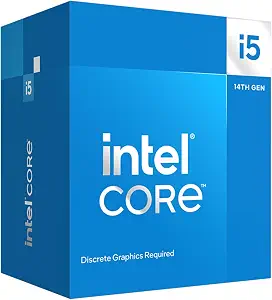
Best Budget is an editorial fit for shoppers who want to consider a 10-core processor without making a higher core count the center of the decision. The Core i5-14400F has 6 P-cores plus 4 E-cores, with 16 threads and a maximum frequency up to 4.7 GHz. Its 20MB cache is another concrete point to compare against the requirements of your intended desktop. Those details describe the processor, but they do not establish how a particular application or game will perform. During Black Friday shopping, use them to decide whether the listed configuration aligns with your priorities rather than treating a seasonal offer as proof of value.
The platform details can make this model a practical candidate when you have a compatible board or are selecting parts together. It works with Intel 600-series motherboards, with a potential BIOS update, and 700-series chipset-based motherboards. It supports DDR4 and DDR5 memory, as well as PCIe 5.0 and 4.0. Those options give you useful checks to make against the motherboard and memory you intend to buy; they do not mean every board or memory kit is interchangeable. Confirm the specific board’s compatibility and BIOS situation before ordering. The included RM1 thermal solution is part of the stated package, so factor that into your parts checklist without assuming anything beyond its inclusion.
A particularly important fit question is graphics: this processor requires discrete graphics. If your plan depends on using graphics built into a processor, this is not the straightforward choice among these three listings; instead, account for a separate graphics solution in the complete build. That requirement is easy to overlook when comparing Black Friday processor offers by name alone. This model may suit a shopper who has already planned discrete graphics and wants the flexibility to choose DDR4 or DDR5, subject to the motherboard selected. Before checkout, verify the exact processor variant and board pairing. The Best Budget label reflects this guide’s role for the model, not a claim that it has the lowest live price or that it will be the best fit for every budget.
Key specs
Cores and threads
10 cores (6 P-cores plus 4 E-cores) and 16 threads
Maximum frequency
Up to 4.7 GHz
Cache
20MB Cache
Motherboard compatibility
Compatible with Intel 600-series (with potential BIOS update) and 700-series chipset-based motherboards
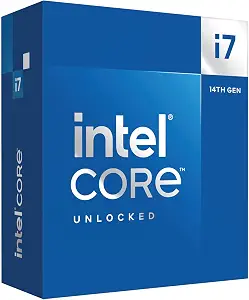
Best Overall is this guide’s editorial choice for a shopper looking for a broad mix of stated specifications, not a claim of measured superiority. The Core i7-14700K lists 20 cores—8 P-cores plus 12 E-cores—and 28 threads. Its maximum frequency is up to 5.6 GHz with Turbo Boost Max Technology 3.0. These figures can help you compare the processor with the work you expect your desktop to handle, but they do not guarantee a particular outcome in any application. For Black Friday, judge the exact offer alongside the rest of your build rather than letting a headline frequency settle the decision.
The listing also includes Intel UHD Graphics 770 integrated graphics. That gives shoppers a graphics detail to weigh when planning a system, especially if they are comparing processors with different stated graphics requirements. Still, decide what graphics arrangement you actually need and check the requirements of your software and intended setup; the listed feature alone does not establish how demanding tasks will run. If your plan includes a separate graphics card, integrated graphics may be less central to your choice. If you do not have a full graphics plan yet, its inclusion is worth noting alongside the other parts you will need.
For platform fit, the Core i7-14700K is compatible with Intel 600-series chipset-based motherboards, with a potential BIOS update, or 700-series chipset-based motherboards. It supports DDR4 and DDR5 platform configurations. Check the exact motherboard model and memory type before treating either option as a match; a processor’s support for both memory generations does not make DDR4 and DDR5 interchangeable on a given board. This Best Overall designation is useful as a starting point for shoppers whose priorities span core and thread counts, listed maximum frequency, integrated graphics, and platform choice. It is not a market-wide award. Compare the full parts list and exact Black Friday listing before deciding whether those features fit your use.
Key specs
Cores
20 cores (8 P-cores plus 12 E-cores)
Threads
28 threads
Integrated graphics
Integrated Intel UHD Graphics 770 included
Maximum frequency
Up to 5.6 GHz with Turbo Boost Max Technology 3.0
Motherboard compatibility
Compatible with Intel 600-series (with potential BIOS update) or 700-series chipset-based motherboards
Memory support
DDR4 and DDR5 platform support
Intel Core Ultra 9 Desktop Processor 285K
Best for a DDR5-focused build with an integrated AI acceleratorCheck Price on Amazon
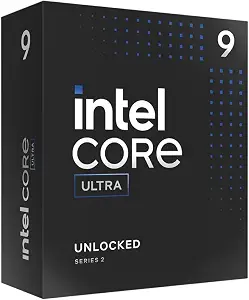
Best for a DDR5-focused build with an integrated AI accelerator is a specific editorial label for the Core Ultra 9 285K. Its listing identifies 24 processing units, divided into 8 Performance and 16 Efficient, and a maximum turbo frequency up to 5.7 GHz. It also lists an integrated Intel AI Boost NPU. That feature set may be relevant if an AI accelerator is a deliberate part of your requirements, but the listing does not establish how a particular program will use it or what results to expect. As you compare Black Friday offers, treat the NPU as a reason to investigate fit, not as a promise of a particular benefit.
This processor uses an LGA 1851 socket and supports DDR5 memory. Those are essential platform checks: verify that the motherboard you plan to use is built for the stated socket and that your memory plan is DDR5. Do not assume that compatibility information for the other processors applies here. If you are upgrading an existing system, identify its motherboard and memory first; if you are assembling a new one, compare the processor and board as a pair. The listing also includes integrated graphics, a separate point to record when mapping out the system’s graphics plan. It does not describe every capability or limitation of that graphics feature.
The Core Ultra 9 285K is identified as an unlocked desktop processor. That status may matter to shoppers who specifically want an unlocked model, but it does not by itself tell you what configuration, cooling, or results to expect. Check the full platform requirements and the exact variant offered before placing an order. Its DDR5 support, LGA 1851 socket, integrated graphics, and AI Boost NPU give it a distinct profile among these choices. The Best for label reflects that combination and the stated focus of this guide; it is not evidence that it is the right processor for every DDR5 build. During Black Friday, weigh those features against your actual needs and the rest of the system cost.
Key specs
Processing units
24 Processing Units (8 Performance + 16 Efficient)
Max turbo frequency
Up to 5.7 GHz max turbo frequency
Processor socket
LGA 1851
Memory support
Supports DDR5 memory
Integrated graphics
Integrated graphics included
AI accelerator
Intel AI Boost NPU integrated
Processor status
Unlocked desktop processor
Check the platform before comparing Black Friday offers
Start with the motherboard you own or expect to buy. The Core i5-14400F and Core i7-14700K list support for Intel 600-series boards, with a potential BIOS update, and 700-series chipset-based boards. The Core Ultra 9 285K instead specifies an LGA 1851 socket. Do not treat those descriptions as interchangeable: confirm the exact motherboard model and processor support before buying. For the two 600-series options, establish whether a BIOS update may be needed and how you would verify that for your particular board.
If you are comparing Black Friday deals across these models, put the board beside the processor on your shortlist. A processor offer that looks appealing in isolation may not suit the motherboard already in your parts list. For a new build, choose the board and processor as a coordinated pair, then check the board’s own documentation for supported configurations. For an upgrade, identify the current board first rather than assuming that a similar chipset name settles compatibility. These checks help you compare usable configurations, not just processor names.
Treat memory support as a build-level choice
The Core i5-14400F and Core i7-14700K both list DDR4 and DDR5 support, while the Core Ultra 9 285K lists DDR5 support. That distinction can narrow your options if you already have memory or have selected a memory standard for a new system. Processor support is only one part of the decision: confirm the specific motherboard’s memory type and supported configuration before ordering. Do not assume that a board accepts both standards simply because a processor supports both.
For Black Friday shopping, compare the full platform cost and compatibility rather than treating memory support as a bonus in a processor-only deal. If you are reusing DDR4, the first two processors are the candidates here whose listed support includes it, but the motherboard still needs to match. If you want a DDR5-focused build, the Core Ultra 9 285K explicitly supports DDR5, and the other two also list DDR5 support. Choose the memory and board together, then judge processor offers against that established plan.
Make the graphics plan explicit
Graphics is a meaningful difference among these listings. The Core i5-14400F requires discrete graphics. The Core i7-14700K lists Intel UHD Graphics 770, and the Core Ultra 9 285K lists integrated graphics. If you already have a discrete graphics plan, include it in your parts checklist and decide whether integrated graphics features matter to you. If you are relying on processor graphics, the i5-14400F’s stated requirement makes it a poor fit for that plan unless you also provide discrete graphics.
A Black Friday processor offer cannot answer whether a system’s graphics arrangement meets your needs. Consider what applications you plan to use and check their requirements separately; the listed processor details do not promise a particular graphics experience. Also verify the exact model shown in the offer, especially when a product name contains a suffix. Recording the graphics requirement beside the board and memory choices can prevent an otherwise easy-to-miss mismatch.
Translate specifications into your everyday workload
Core counts, thread counts, and frequency figures are useful for describing the listed processors, but they do not settle how a desktop will feel in every task. The i5-14400F lists 10 cores and 16 threads; the i7-14700K lists 20 cores and 28 threads; the Core Ultra 9 285K lists 24 processing units split between Performance and Efficient units. The i7 and Ultra 9 also list maximum frequencies, with different qualifications. Compare those facts with the software you intend to run rather than assuming that one headline figure predicts every workload.
For a mixed-use desktop, write down the tasks that matter most and decide which specifications are relevant to them. A shopper who values the Core Ultra 9’s integrated AI Boost NPU has a different priority from one focused on DDR4 flexibility or the i5’s discrete-graphics requirement. During Black Friday, avoid turning the comparison into a race for the largest number. Use the specifications to identify candidates, then leave unverified application performance open until you have reliable, task-specific evidence.
Read the exact offer and finish the parts checklist
A seasonal label does not establish that a particular listing is a good match or that an offer is active. Compare the exact processor model and variant displayed, then confirm that the specifications match the one you intended to consider. Review your motherboard, memory, and graphics plan together. For the i5-14400F, remember the discrete graphics requirement and included RM1 thermal solution; for the i7-14700K, check the 600- or 700-series board and memory choice; for the Ultra 9 285K, verify the LGA 1851 platform and DDR5 plan.
Before a Black Friday purchase, keep a short decision record: the tasks you care about, the board and memory that fit, the graphics approach, and any processor feature that is essential rather than merely interesting. Then compare the exact offer against that list without assuming a discount, stock status, or seller policy. This method keeps attention on a complete, compatible system and gives you a clear reason to accept or pass on each listing.
Make your Black Friday choice
The best Intel CPU for your build depends on which platform details and listed features matter most to you. Consider the i5-14400F if its DDR4 or DDR5 support suits your board and you have discrete graphics planned; weigh the i7-14700K for its listed core and thread counts, integrated graphics, and platform options; and look to the Core Ultra 9 285K if its DDR5 platform and integrated AI accelerator match your priorities. Black Friday can be a useful time to compare offers, but the exact model and complete parts list should guide the decision. Verify compatibility before checkout, and do not let a seasonal label substitute for a fit check.