Western Digital 8TB WD Red Plus NAS Internal Hard Drive HDD (ASIN B0CMQ6SK7W)
Best Budget
Seagate IronWolf 4TB NAS Internal Hard Drive CMR 3.5 Inch SATA 6Gb/s 5400 RPM 64MB Cache for RAID Network Attached Storage Rescue Services (ST4000VNZ06/006)
Seagate IronWolf 4TB NAS Internal Hard Drive CMR 3.5 Inch SATA 6Gb/s 5400 RPM 64MB Cache for RAID Network Attached Storage Rescue Services (ST4000VNZ06/006) (ASIN B09NHV3CK9)
Best Nas Drive Buying Guide — Black Friday Deals 2026
What will your NAS actually store, and what does it need from a drive? Those questions are more useful than starting with a sale banner. The options here range from a 4TB Seagate IronWolf to Western Digital Red Plus and Red Pro drives, with CMR recording and SATA interfaces across the lineup. Their capacities, rotational speeds, caches and stated workload rates differ, so the right fit depends on your storage plan and the requirements of your NAS. During Black Friday, compare the exact product and variant you intend to buy; an event label alone does not establish that an offer is worthwhile. This guide lays out the listed details and the decisions they can help you make.
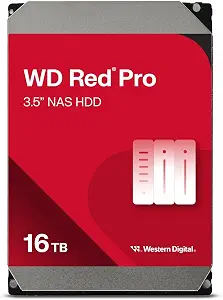
Western Digital 16TB WD Red Pro NAS Internal Hard Drive HDD – 7200 RPM, SATA 6 Gb/s, CMR, 512 MB Cache, 3.5″ – WD161KFGX
Western Digital 16TB WD Red Pro NAS Internal Hard Drive HDD – 7200 RPM, SATA 6 Gb/s, CMR, 512 MB Cache, 3.5″ – WD161KFGX (ASIN B08K3VVKSW)
Best Overall is the editorial fit for shoppers who want the largest stated capacity among these picks and a drive with a higher listed workload rate. This Western Digital Red Pro has 16 TB of storage, a 7200 rpm rotational speed, 512 MB of cache and a workload rating of 550TB/yr workload rate(2). It uses CMR recording, a Serial ATA-600 interface and a 3.5 inches form factor. Those are concrete details to compare with your NAS documentation and storage plan, not a promise that the drive will suit every system or workload. On Black Friday, treat the label as a shortlist cue and verify the exact model and variant in the offer.
Think about this option if your plan calls for a large amount of storage in an individual drive and the NAS documentation accepts the relevant drive format and interface. Its 16 TB capacity may be pertinent when estimating how much data you want to keep on the drive, while the 7200 rpm speed and cache are separate specifications to consider rather than a guarantee of a particular result in your setup. The provided workload detail is explicitly a rating with a parenthetical qualification; keep that wording in context when deciding whether it aligns with your expected use. A listed specification cannot decide whether a NAS arrangement is suitable for your files, access pattern or backup plan.
A practical Black Friday decision is to compare the exact Red Pro offer against your intended use, not to assume the event makes the drive a fit. Confirm that the listing identifies the 16 TB WD161KFGX and that the specifications correspond to this model. Check whether the 3.5 inches form factor and Serial ATA-600 interface match your NAS requirements, then weigh the 512 MB cache, 7200 rpm speed and stated workload detail according to your priorities. CMR is another explicit selection detail. Best Overall is an editorial choice among these listed products, not a test result or claim of universal superiority. Choose it when its capacity and listed specifications align with your documented needs.
Key specs
Storage capacity
16 TB
Rotational speed
7200 rpm
Hard disk interface
Serial ATA-600
Recording technology
CMR
Cache
512 MB
Form factor
3.5 inches
Rated workload
Rated for 550TB/yr workload rate(2)
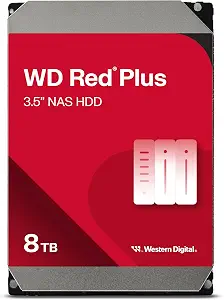
Western Digital 8TB WD Red Plus NAS Internal Hard Drive HDD
Western Digital 8TB WD Red Plus NAS Internal Hard Drive HDD (ASIN B0CMQ6SK7W)
Best for an 8TB capacity option is a straightforward role for this Western Digital Red Plus. The listing gives its storage capacity as 8000 GB, along with a Serial ATA-600 interface, 5640 rpm rotational speed, CMR recording, 256 MB cache and a 3.5 inches form factor. It also lists support for up to 180 TB/yr workload rate and NASware firmware for compatibility. These facts give shoppers several points to check against their own NAS documentation. They do not establish compatibility with every NAS or describe how the drive will perform in a particular system. For Black Friday, make sure the exact Red Plus variant and its listed details match the offer you are evaluating.
This option may suit a shopper whose storage plan points to this capacity class rather than the larger Red Pro or the smaller IronWolf in this guide. Start by asking how much space your files require and whether your NAS documentation accepts the drive’s form factor and interface. Then consider the stated workload rate in relation to your expected use, without treating it as a guarantee about an individual setup. The 5640 rpm rotational speed and 256 MB cache are useful specifications to compare, but they are not substitutes for checking the system requirements. CMR and the listed NASware firmware are also part of the product description and may help you organize your shortlist.
The Best for an 8TB capacity option label reflects this drive’s stated capacity category among the featured choices; it is an editorial distinction, not a measured performance claim. Before a Black Friday purchase, confirm that the listing is for the Red Plus described here, rather than relying on a family name or a general image. Verify the capacity as shown, and check the interface and form factor against the NAS maker’s requirements. If workload rate is important for your decision, note the listed support for up to 180 TB/yr and compare it with your own expected workload; do not read it as a prediction of service life. Finally, decide whether the capacity, cache, rotational speed, CMR recording and firmware details align with the job you have in mind.
Key specs
Storage capacity
8000 GB
Interface
Serial ATA-600
Rotational speed
5640 rpm
Recording technology
CMR
Cache
256 MB Cache
Form factor
3.5 inches
Workload rate
Supports up to 180 TB/yr workload rate
Firmware
NASware firmware for compatibility
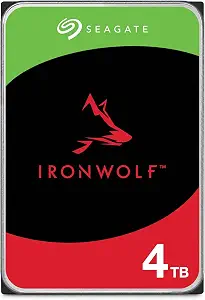
Seagate IronWolf 4TB NAS Internal Hard Drive CMR 3.5 Inch SATA 6Gb/s 5400 RPM 64MB Cache for RAID Network Attached Storage Rescue Services (ST4000VNZ06/006)
Seagate IronWolf 4TB NAS Internal Hard Drive CMR 3.5 Inch SATA 6Gb/s 5400 RPM 64MB Cache for RAID Network Attached Storage Rescue Services (ST4000VNZ06/006) (ASIN B09NHV3CK9)
Best Budget is the editorial label for the Seagate IronWolf in this selection, not a statement about its current price or a promise of savings. Its listed capacity is 4TB, and its specifications include CMR recording, a 3.5 Inch form factor, SATA 6Gb/s interface, 5400 RPM rotational speed and 64MB Cache. The product description also identifies NAS compatibility for up to 8-bay, multi-user NAS environments. That compatibility wording is specific to the listing and should not replace checking the documentation for your own NAS. During Black Friday, compare the precise ST4000VNZ06/006 variant and the actual offer details instead of assuming the label guarantees a deal.
A shopper with a storage plan centered on 4TB may find this a useful starting point for comparison. The stated capacity gives you a basis for asking whether the drive has the space you need, while the listed compatibility language may be relevant if your NAS falls within the described environment. Confirm that with the system’s documentation rather than extending the claim to other configurations. The SATA 6Gb/s interface and 3.5 Inch form factor are physical and connection details to verify. CMR, rotational speed and cache add other points for your shortlist, but none alone determines whether this is the right drive for your files or how your NAS will behave.
For a Black Friday comparison, separate the editorial Best Budget designation from the live offer. Check that the product page names the Seagate IronWolf model shown here, and inspect the selected variant before making a decision. Then match the 4TB capacity, SATA 6Gb/s interface and 3.5 Inch form factor with your requirements. The listing’s phrase “up to 8-bay, multi-user NAS environments” is a useful compatibility detail to investigate, not a blanket promise for every NAS. Consider whether the CMR recording type, 5400 RPM speed and 64MB cache make sense for the role you have planned. Pick this drive when its stated capacity and details fit your documented needs, not merely because a seasonal listing calls attention to it.
Key specs
Capacity
4TB
Recording type
CMR
Form factor
3.5 Inch
Interface
SATA 6Gb/s
Rotational speed
5400 RPM
Cache
64MB Cache
NAS compatibility
up to 8-bay, multi-user NAS environments
Start from the files you need to keep
Before browsing Black Friday offers, write down what the NAS is meant to hold. A household archive, a collection of media files or shared work files can lead to different capacity plans; the right choice depends on your own quantity of data and how you intend to organize it. This guide includes a drive listed at 4TB, one at 8000 GB and one at 16 TB. Those are the capacities supplied for these particular products, not a recommendation to choose the largest option automatically. Consider the space you need now and the plan you have for adding or changing storage, using the NAS documentation to understand how drives fit into the arrangement you want.
Keep the drive capacity distinct from the total capacity you expect from a NAS arrangement. The supplied product facts describe individual drives, not the usable space or configuration outcome of a complete system. If you use a multi-drive setup, consult the NAS maker’s guidance rather than assuming the listed drive capacity translates directly into a particular amount available for files. Black Friday can make browsing feel urgent, but a short written storage plan helps keep an offer in perspective. Note the capacity you are considering, your intended role for the drive and any constraints from the NAS documentation. That gives you a reasoned shortlist before you compare exact listings.
Build a fit check from the NAS documentation
Physical fit and connection are basic checks worth completing before comparing seasonal offers. Each drive here is described with a 3.5-inch-class form factor in its supplied product facts, although the formatting differs: the two Western Digital drives use “3.5 inches,” while the Seagate listing says “3.5 Inch.” The Western Digital products list Serial ATA-600, and the Seagate lists SATA 6Gb/s. Compare the wording on the product page with the requirements in your NAS documentation; do not assume a family name alone confirms the exact fit. This is a compatibility check for your particular system, not a general claim that the drives work in every NAS.
The Seagate listing says it is compatible with up to 8-bay, multi-user NAS environments, and the WD Red Plus lists NASware firmware for compatibility. Preserve the scope of those descriptions: neither detail replaces confirming the NAS model and the selected variant. Likewise, the Red Pro’s interface and form-factor details need to match the system you plan to use. A Black Friday listing may present product-family wording prominently, so inspect the exact model and the specification details shown for the offered variant. If the information does not line up clearly with your system documentation, pause and resolve that question before treating an offer as a candidate.
Read the drive specifications in their own lanes
Rotational speed and cache appear on all three product records, but they describe separate specifications. The Red Pro lists 7200 rpm and 512 MB cache; the Red Plus lists 5640 rpm and 256 MB Cache; and the IronWolf lists 5400 RPM and 64MB Cache. These figures help distinguish the listed products, but they do not by themselves establish how a drive will perform in your NAS or which is best for your files. Use them as comparison details alongside capacity, system fit and the work you expect the drive to do. Avoid treating one specification as a shortcut for a complete assessment.
Recording type is another explicit point of comparison: each featured drive is listed as CMR. That lets you confirm the stated recording technology on the exact product page, but it should not be stretched into claims about results or suitability that are not in the product facts. The Red Plus also names NASware firmware for compatibility, while the Red Pro and IronWolf facts supplied here identify different details. During Black Friday, read the whole specification set for the exact variant instead of making a decision from a single speed, cache or recording label. Your NAS documentation and your intended storage job remain central to the choice.
Put workload details beside your own plans
Two of the listings provide a workload figure, with different wording. The Red Pro is described as “Rated for 550TB/yr workload rate(2),” while the Red Plus says it “Supports up to 180 TB/yr workload rate.” Keep each qualification attached to its figure. These descriptions may be relevant when you think about the amount of work you expect from a drive, but they are not promises of lifespan, a prediction for your NAS or a substitute for the manufacturer’s full documentation. The IronWolf facts supplied here do not include a workload-rate figure, so avoid inferring anything from that absence.
A useful decision journal can record your expected use, the workload information the listing actually provides and any questions that remain. If you cannot translate your needs into a meaningful comparison, consult the NAS and drive documentation rather than treating a larger figure as an automatic answer. Black Friday urgency is no reason to detach a workload figure from its qualifying language. Also keep capacity and workload separate: a capacity that suits your files does not itself settle whether the rest of the drive specifications fit your intended role. Check the exact item page for the details associated with the variant you are considering.
Compare the complete Black Friday offer
A seasonal banner does not say whether the product variant matches your plan, and no active promotion is established by this guide. Compare the exact item name and model shown in the offer with the product you intended to evaluate. For the Red Pro, that means checking WD161KFGX; for the IronWolf, ST4000VNZ06/006; and for the Red Plus, confirming the correct 8TB-class option. Then review capacity, interface, form factor and the other listed specifications on the page. If a listing uses a broader family label, do not assume that every variant shares the details described here.
Before you decide, make a compact checklist: Does the NAS documentation support the connection and physical format? Does the drive’s stated capacity suit your storage plan? Have you considered the recording type, rotational speed and cache without reading them as guarantees? If a workload figure or compatibility statement matters, does its exact qualification match your needs? Finally, compare the offer details for the precise variant rather than relying on Black Friday wording alone. If any key detail is unclear, wait until you can verify it. That careful process is more useful than treating an event label or an editorial award as proof that a drive is right for your setup.
Make your Black Friday choice
Choose by fit first, then assess the exact offer. The Red Pro brings a listed 16 TB capacity, 7200 rpm speed and stated workload detail; the Red Plus gives an 8000 GB option with NASware firmware; and the IronWolf provides a 4TB option with compatibility wording for up to 8-bay, multi-user NAS environments. Those distinctions help frame a shortlist, but your NAS documentation and storage plan decide which details matter. Before a Black Friday checkout, verify the model, variant, capacity, interface, form factor and any specification you rely on. Best Overall, Best Budget and Best for an 8TB capacity option are editorial labels, not guarantees of fit or value. Let your checklist—not the seasonal banner—make the final call.