INSIGNIA 32″ Class F40 Series 1080P Full HD Direct LED Smart Fire TV, Voice Remote with Alexa, Free & Live TV (ASIN B0HGTVVVJW)
Best for Roku and three HDMI ports
Hisense 32-Inch Class QD4SR Series Hi-QLED HD Smart Roku TV (32QD4HSR, 2026 Model) – Dolby Audio, Compatible with Alexa, Full Array LED, Slim Bezel Design
Hisense 32-Inch Class QD4SR Series Hi-QLED HD Smart Roku TV (32QD4HSR, 2026 Model) – Dolby Audio, Compatible with Alexa, Full Array LED, Slim Bezel Design (ASIN B0GWDKPQB5)
Best Size32Inch Tv Buying Guide — Black Friday Deals 2026
A 32-inch TV can serve a focused role: a screen for a smaller room, a secondary viewing spot, or a setup where the platform and connections matter as much as the picture specification. This guide compares three options with different priorities: a 1080p Fire TV, a 720p Fire TV, and a Roku model with three HDMI ports. For Black Friday, begin with the exact model and the use you have in mind, then compare the listed offer without assuming that a sale headline tells you which version is included. The right choice depends on what you watch, how you connect devices, and which interface you prefer.
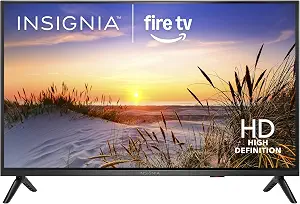
INSIGNIA 32″ Class F20 Series LED HD Smart Fire TV
INSIGNIA 32″ Class F20 Series LED HD Smart Fire TV (ASIN B0F7RZ1MS9)
Best Budget is an editorial label for the 720p Fire TV in this group, not a statement about its current price or a claim that it is on promotion. Its listed resolution is 720p and its refresh rate is 60 hertz. This can be a sensible match for a shopper who has decided that a 32-inch screen with this resolution meets the intended role, rather than paying attention to a headline before settling the basic requirements. The useful comparison is between what the screen is specified to offer and what you actually need from a smaller television.
The Alexa Voice Remote lets you control entertainment, search across apps, switch inputs, and more using voice, as described in the listing. That may suit someone who wants voice commands to be part of everyday navigation. DTS Virtual-X Sound is also specified. Treat that as a listed sound feature, not a guarantee about how audio will come across in your particular room. The model includes two HDMI ports, so note the devices you plan to connect and whether that total works for your setup. Its VESA mount standard is 100 x 100 mm; if wall mounting is part of your plan, compare that exact standard with the mount information you have before choosing.
On Black Friday, compare this model with the 1080p Fire TV by checking the exact resolution and product identity first. A lower-resolution specification is a real tradeoff to consider, while voice control, sound details, and the number of HDMI ports may also matter to your decision. The facts provided do not establish a price advantage, so judge any offer by the actual variant and terms shown rather than assuming this is cheaper. Best Budget describes the editorial role assigned among these featured options; it does not certify the lowest market price. If your priorities are the listed Alexa voice functions and a familiar Fire TV setup, those details may carry more weight than selecting a higher resolution. If resolution is your main criterion, compare the 1080p option directly before deciding.
Key specs
Resolution
Resolution 720p
Refresh rate
Refresh Rate 60 hertz
Voice control
The Alexa Voice Remote lets you easily control your entertainment, search across apps, switch inputs, and more using just your voice.
Sound
DTS Virtual-X Sound
HDMI ports
Total Number of HDMI Ports 2
VESA mount
VESA Mount Standard 100 x 100 mm
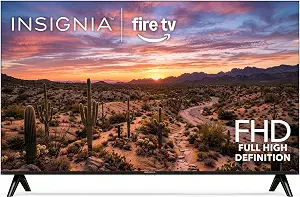
INSIGNIA 32″ Class F40 Series 1080P Full HD Direct LED Smart Fire TV, Voice Remote with Alexa, Free & Live TV
INSIGNIA 32″ Class F40 Series 1080P Full HD Direct LED Smart Fire TV, Voice Remote with Alexa, Free & Live TV (ASIN B0HGTVVVJW)
Best Overall is an editorial pick for shoppers who want a 32-inch screen with a clearly specified 1080p resolution and Fire TV platform. The listed refresh rate is 60 hertz, and the model has two HDMI inputs, including one with eARC. Those details make it a practical candidate for someone who wants a straightforward small-screen setup and may connect another device through HDMI. The eARC input is worth checking against the equipment you intend to use; the listing identifies the connection, but your planned layout should guide whether it is useful to you.
The platform is FireOS, and the listing specifies Bluetooth and Wi-Fi. Apple AirPlay 2 is also listed for sharing videos, photos, music, and more from Apple devices to the TV. That gives shoppers who use Apple devices a concrete sharing feature to weigh alongside the platform choice. The product name also identifies a voice remote with Alexa, while the supplied specifications identify FireOS; consider which controls and sharing route you expect to use regularly rather than choosing from a feature name alone. For a household with varied devices, write down the source devices and the way you expect to share content before deciding.
For Black Friday, this is a useful option to compare when 1080p is a priority among these three choices. That preference is not a claim that every viewer will see a meaningful difference in every room; it is a way to make the resolution choice explicit. Check that the offer names this exact 1080p model, rather than relying on a similar product title or a screen-size match. Best Overall here means it brings together the 1080p specification, FireOS, AirPlay 2, and an HDMI input with eARC in the supplied product details. It is not a measured award or a promise that it will suit every setup. If those particular points fit your plans, compare the exact variant and offer terms; if you mainly want Roku or more HDMI inputs, the other picks have a different emphasis.
Key specs
Resolution
Resolution 1080p
Screen size
Screen Size 32 inches
Refresh rate
Refresh Rate 60 hertz
Operating system
FireOS
HDMI inputs
2 HDMI Inputs including one with eARC
Wireless connectivity
Bluetooth, Wi-Fi
Apple device sharing
Apple AirPlay 2: Share videos, photos, music, and more from Apple devices to your smart TV.
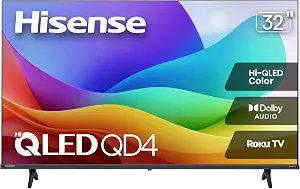
Hisense 32-Inch Class QD4SR Series Hi-QLED HD Smart Roku TV (32QD4HSR, 2026 Model) – Dolby Audio, Compatible with Alexa, Full Array LED, Slim Bezel Design
Hisense 32-Inch Class QD4SR Series Hi-QLED HD Smart Roku TV (32QD4HSR, 2026 Model) – Dolby Audio, Compatible with Alexa, Full Array LED, Slim Bezel Design (ASIN B0GWDKPQB5)
Best for Roku and three HDMI ports is an editorial label grounded in two listed details: Roku OS and three HDMI ports. The model is specified as a 32-inch TV with 720p resolution and a display refresh rate of 60. That combination makes it a distinct candidate for someone who prefers the Roku interface and wants to account for several HDMI-connected devices. Before choosing it, consider whether the resolution fits your expectations; the platform and input count do not change the listed display specification.
AirPlay is listed for screen mirroring, which may be relevant if you want that sharing route. The product name identifies the model as the Hisense 32-Inch Class QD4SR Series Hi-QLED HD Smart Roku TV, 2026 Model; the specification details provided here identify Roku OS, resolution, refresh rate, HDMI ports, AirPlay, and dimensions. Keep the comparison centered on those concrete points and your intended use. For example, note how many HDMI devices you expect to connect and whether you plan to mirror content, then compare those needs with the listed features. Do not assume a connection or sharing method beyond what is specified.
The dimensions are listed as 3.1″D x 28.5″W x 16.8″H. Use that exact notation when checking the intended location, and verify the fit against your available space rather than relying only on the 32-inch class label. For Black Friday, confirm that the listing and selected variant match this Roku model before weighing the offer. The label Best for Roku and three HDMI ports is a way to identify its particular appeal among these picks, not a claim of measured superiority. It may be the most relevant option for your shortlist if Roku OS and three HDMI connections match your routine; if FireOS or 1080p is more important, compare the alternatives on those specific priorities.
Key specs
Screen size
32 inches
Resolution
720p
Display refresh rate
60
Operating system
Roku OS
HDMI ports
3
Screen mirroring
AirPlay
Dimensions
3.1″D x 28.5″W x 16.8″H
Give the screen a job before comparing specifications
A small television can be chosen for different reasons, and those reasons help sort the options. If you want a secondary screen for occasional viewing, you may prioritize an interface you already know or a connection plan that is easy to manage. If it will be the main screen in a room, resolution may deserve more attention. Start by writing down the setting and the routine: who will use it, what devices will connect, and which sharing or control features matter. Those are personal planning questions, not claims about how any particular model performs.
The three choices include both 720p and 1080p specifications, so decide whether that distinction matters to you before a Black Friday banner becomes the focus. The two Fire TV options both list 60 hertz refresh rates, while the Roku model lists a display refresh rate of 60. Treat the resolution and refresh-rate entries as separate specifications, not as a complete description of picture quality. Make a shortlist based on your own priorities, then compare the exact models that remain. This keeps a useful feature from becoming a distraction simply because it appears prominently in a listing.
Make interface choice a daily-use decision
The platform affects the kind of interface you will navigate, so it belongs in the decision before checkout. Two of these products specify FireOS and the third specifies Roku OS. If you already have a preference, that may narrow the field quickly. If you do not, consider which interface you would rather learn and whether the listed sharing features relate to devices you use. The provided details identify AirPlay 2 on one Fire TV and AirPlay screen mirroring on the Roku model. The wording differs, so keep the distinction intact when comparing.
Voice control is another concrete point, but it is specified for one product in particular: its Alexa Voice Remote supports control of entertainment, app searches, and input switching by voice. The other Fire TV product name describes a voice remote with Alexa, while the Roku product name notes Alexa compatibility. Avoid treating those descriptions as interchangeable with the detailed voice functions specified for the first model. For Black Friday, compare the exact listing and decide which interface or sharing route you expect to use. A feature only helps your decision if it fits your routine.
Lay out connections around the equipment you own
Count the HDMI-connected devices you expect to use, then compare that plan with each television’s listed inputs. The two Fire TV models each specify two HDMI inputs or ports; one of them identifies one input with eARC. The Roku model lists three HDMI ports. This is a simple way to distinguish the options without assuming that a larger count automatically makes a better choice. Your actual setup determines whether the available inputs are sufficient and whether the eARC detail is relevant.
Write down the devices you may connect and note which input arrangement you want. If you are considering the 1080p Fire TV, check whether its eARC input fits your equipment plan. If you are drawn to the Roku model, the three-port specification may be pertinent to a setup with several HDMI devices. For Black Friday, verify the exact variant rather than relying on a broad product-family description. Do not infer unlisted ports or connection capabilities from a platform name; use the product details supplied for the model you are considering.
Check the room, placement, and mounting plan
A screen that suits your plans also needs a workable place to sit or mount. The Roku model’s dimensions are given as 3.1″D x 28.5″W x 16.8″H, so compare that exact notation with the space available. The 720p Fire TV lists a VESA mount standard of 100 x 100 mm. If wall mounting is part of your plan, verify that the mount information you are using matches this standard. The provided details do not establish the dimensions or mounting standard for the other models, so do not transfer one product’s measurement to another.
Think through where the television will be used and what will be nearby: the viewing position, connected equipment, and the way you expect to control or share content. These are practical checks, not reasons to assume an unlisted feature. Black Friday can make it tempting to focus on the offer first, but a placement mismatch can matter more than an attractive headline. Confirm the exact model and its available measurements, then decide whether the space and mounting approach make sense for that particular choice.
Compare the offer by model, not by seasonal wording
For Black Friday, use a consistent checklist for every listing: exact model identity, resolution, platform, HDMI details, and any specific feature you care about. Compare the selected variant with the model you intended to buy; a shared screen size or similar product-family name is not enough to establish that the details match. The facts here do not provide prices or discounts, so this guide cannot identify a bargain or predict what an offer will be. The point is to compare the offer you see without filling gaps with assumptions.
Next, review the listing’s stated terms and make sure you understand what is included for the exact variant. Keep a note of your must-haves and acceptable tradeoffs, such as choosing between 720p and 1080p or between Roku OS and FireOS. Avoid treating Best Overall or Best Budget as evidence of a current promotion; these are editorial labels among the featured products. A careful Black Friday comparison connects the offer to the model and the needs you wrote down, rather than allowing a seasonal label to make the decision for you.
Make your Black Friday choice
The strongest shortlist is the one tied to your room and routine: the 1080p Fire TV for shoppers prioritizing that resolution, the 720p Fire TV for those drawn to its specified Alexa voice functions and other listed details, or the Roku model for shoppers who value Roku OS and three HDMI ports. These are distinct considerations, not universal rankings. During Black Friday, check the exact model and variant, compare its stated features with your plan, and judge the offer on the information actually presented. That leaves the final decision with the factors most relevant to your setup.