GOYOJO GRS/GRL Series Thermal Riflescope for Hunting (ASIN B0FS6J6DK5)
Best Thermal Scope Buying Guide — Black Friday Deals 2026
Choosing a thermal scope is easier when you separate the decisions: what viewing setup you want, which listed specifications matter to that task, and what the actual Black Friday offer includes. These three options differ in sensor resolution, lens details, magnification and onboard imaging features, so a seasonal label alone cannot determine fit. Start by describing how you expect to use the scope and what you need to confirm about mounting and handling. Then compare the exact model and variant shown on the offer with the facts here. The recommendations are editorial shortlist roles among these products, not the result of comparative testing or a claim about market-wide value.
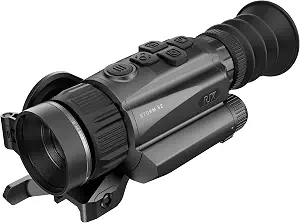
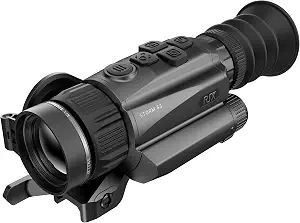
RIX Storm S2 256×192 Thermal Scope, 25mm Lens for Hunting
The RIX Storm S2 is the Best Overall pick in this small group for shoppers who want a clearly specified combination of thermal sensor, lens, magnification range and mounting details to assess together. Its listed sensor is 256×192, its objective lens diameter is 25 millimeters, and its stated magnification runs from 3.5 x to 14 x. The listing also specifies a Picatinny Mount and 48 millimeters of eye relief. Those details give a shopper several concrete fit questions to answer before choosing it, rather than relying on a broad seasonal label. The Best Overall designation is an editorial role among these three products, not a claim that it is superior for every use.
Think through the viewing task before treating the magnification range as decisive. Consider whether you expect to use the lower end, the higher end, or different settings in different situations, and compare that expectation with the stated range. The listing gives the sensor and objective lens separately, so keep both in view when you compare it with another model; neither specification alone describes every aspect of the viewing experience. If a Picatinny Mount is part of your intended setup, verify that the exact product variant on the Black Friday offer is the one whose listed mount details you have reviewed. Do not assume that a familiar model name settles every configuration question.
The listed dimensions are 2.5″L x 2.2″W x 5.3″H, and the item weight is 14.4 ounces. Use those exact figures as checkpoints when considering how the unit may fit your planned arrangement and how much listed weight you are prepared to accommodate. They do not answer every question about your equipment or preferences, so check the actual offer for the details relevant to your setup. Eye relief is also worth considering alongside your intended viewing position; the listed figure is a useful point of comparison, not a substitute for confirming personal fit.
For Black Friday, compare the exact Storm S2 listing with the same model and variant rather than assuming every seasonal offer covers identical specifications. Check that the name, sensor, lens, magnification, mount and physical details match what you intend to buy. This option makes sense to shortlist when those details align with your priorities and you want a stated magnification range plus explicit mount and eye-relief information. If your decision turns on a feature not included in the available listing facts, verify it on the offer before checkout instead of inferring an answer.
The RIX STORM-S3 earns the Best for Built-In Storage role because its listing explicitly specifies built-in EMMC (32 GB). That makes onboard storage a straightforward point to weigh if keeping stored material on the scope matters to your shopping plan. The product is also listed with a 384×288 thermal sensor, a 35mm detective lens and 3.5x-14x magnification. These details describe different parts of the specification: storage, sensor, lens and magnification. Compare each against your own priorities rather than assuming one listed feature settles the whole decision. The label identifies a useful reason to consider this model among the options here; it does not claim measured superiority.
The listing states a 7.5° horizontal field of view. Put that figure beside the listed magnification range when deciding what information you want to compare across candidate scopes. A field-of-view specification can help organize the comparison, but the figure alone does not tell you whether the scope suits your particular viewing task. If you have a preferred way of using magnification or want to compare the displayed view with another listing, check the details of the exact models under consideration. Keep the source’s description, 35mm detective lens, intact when checking the offer rather than silently treating it as a different lens specification.
Five selectable image modes are listed. If having selectable modes is relevant to how you want to use the device, include that feature in your checklist and confirm the exact model on the Black Friday offer. The supplied facts do not describe how the modes differ, so do not assume a particular mode provides a particular result. Likewise, built-in EMMC (32 GB) establishes the stated storage specification, but it does not by itself answer every question about file handling or recording. Look for those details on the actual offer if they affect your choice.
A practical way to assess this option is to write down what you need from storage first, then compare the rest of the specifications without letting the storage label crowd out fit. Check whether the sensor, lens, magnification and listed field of view are the combination you want to evaluate. Black Friday can make multiple listings appear in the same search, so confirm the model name and variant instead of assuming a nearby result is identical. Choose the STORM-S3 when the listed onboard storage is a meaningful requirement and the remaining details also suit your plan; verify any unanswered offer-specific questions before checkout.
Key specs
Thermal sensor
384×288 Thermal sensor
Lens
35mm detective lens
Magnification
3.5x-14x magnification
Horizontal field of view
7.5° horizontal field of view
Storage
built-in EMMC (32 GB)
Image modes
5 selectable image modes
GOYOJO GRS/GRL Series Thermal Riflescope for Hunting
GOYOJO GRS/GRL Series Thermal Riflescope for Hunting (ASIN B0FS6J6DK5)
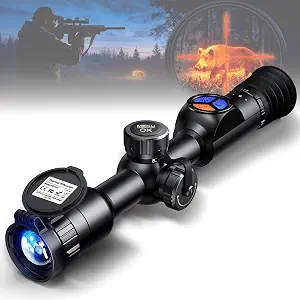
The GOYOJO GRS/GRL Series is the Best Budget editorial pick in this selection. That label is a shortlist role, not a statement that it has the lowest current price or that a Black Friday deal is active. Its listed specification set includes a 25mm objective lens, a 256×192 thermal sensor with <35mK sensitivity, and adjustable optical magnification from 1X–8X. If this combination fits your priorities, compare the exact offer and variant before treating the label as a reason to buy. The listed facts give you specific items to check, but do not establish what the current offer costs or whether it is discounted.
This model also lists 50Hz High Refresh Rate Imaging, seven selectable imaging modes and ten reticle options. Those are useful comparison points if refresh rate, selectable image choices or reticle selection are on your personal checklist. The supplied details do not explain the effect of each mode or reticle, so consider whether you need further information before making those features central to the decision. Its optical magnification is stated as adjustable from 1X–8X; compare that range with the way you expect to use a scope, rather than assuming a wider or narrower range is inherently preferable.
For shoppers who care about onboard capture, the listing specifies built-in 32GB internal storage and RAV (Recoil Activated Video), which records the instant a shot is fired. Those details make it possible to distinguish this product from a listing that does not state the same recording feature, without assuming anything about features not provided for another model. The stated built-in battery runtime is 7–9 hours. Treat that as the listed runtime, not a guarantee for every use condition, and check the offer for any further battery information that matters to your plans.
Before choosing it during Black Friday, verify that the product page is for the GRS/GRL Series model and variant you intend to compare. Then review the lens and sensor, magnification, imaging options, storage, RAV description and runtime as a group. This model suits a shopper whose shortlist gives weight to those explicitly listed features and who is prepared to confirm any unanswered fit questions on the actual offer. The Best Budget label does not replace a price check: compare the exact current offer with your alternatives and make the decision from the details shown, not an assumed discount.
Key specs
Lens and sensor
25mm objective lens & 256×192 thermal sensor with <35mK sensitivity
Optical magnification
1X–8X adjustable optical magnification
Refresh rate
50Hz High Refresh Rate Imaging
Imaging options
7 selectable imaging modes and 10 reticle options
Internal storage
built-in 32GB internal storage
Video recording
RAV (Recoil Activated Video), which records the instant a shot is fired
Battery runtime
7–9 hours of runtime with the built-in battery
Describe the viewing job before comparing specifications
Begin with a plain-language description of the job you have in mind. Think about where and how you expect to use a scope, what you want to see, and which practical constraints matter in your setup. This keeps the comparison focused: someone prioritizing a stated magnification range may organize a shortlist differently from someone who cares most about onboard storage or selectable imaging options. You do not need to decide that one type of specification is universally more important. You need to identify which details would actually change your own choice.
Next, turn that description into a short checklist. Include the sensor and lens information you want to compare, the magnification approach that suits your plan, and any mounting, eye-relief or physical-fit questions that need an answer. For imaging, note whether selectable modes, reticles or recording matter to you. Match each question to a fact that is available, and mark the rest as something to verify on the exact product offer. This prevents a feature name from standing in for an answer the listing does not provide.
During Black Friday, search results and offer pages can put several products close together. Revisit your checklist against the exact model and variant rather than relying on a category label or a product image. If two models have different listed specifications, compare the details that relate to your intended task instead of declaring one a winner based on a single number. A deliberate starting point helps you use the seasonal shopping window without confusing a tempting offer with a suitable configuration.
Read sensor, lens and magnification as separate decision points
Sensor resolution and lens details are worth recording separately when you compare these listings. The Storm S2 lists a 256×192 sensor and a 25-millimeter objective lens diameter; the STORM-S3 lists a 384×288 sensor and a 35mm detective lens; the GOYOJO listing gives a 256×192 sensor with <35mK sensitivity and a 25mm objective lens. Preserve each listing’s wording and units when you build a comparison. Similar-looking entries should not be treated as interchangeable, and a different sensor figure alone should not be used to infer an overall result.
Magnification deserves its own line. The Storm S2 lists 3.5 x to 14 x, the STORM-S3 lists 3.5x-14x, and the GOYOJO series lists adjustable optical magnification from 1X–8X. Think about what range you expect to use and whether the product’s stated range matches that preference. The STORM-S3 also provides a 7.5° horizontal field of view, so include that specific figure if field of view is part of your comparison. The available facts do not provide a matching field-of-view figure for every option.
Use Black Friday as a reason to compare carefully, not to rush past distinctions. Write down the model and the exact specification as shown on the offer, including the correct variant. If an offer changes the product configuration, check whether the sensor, lens or magnification information still matches the option you intended to assess. A specification table helps you spot what is known and what remains unconfirmed; it should not be used to invent an answer or promise a particular viewing experience.
Check handling and setup details against your own arrangement
A specification comparison is incomplete if the listed setup details do not match the questions you have about fit. The Storm S2 provides a Picatinny Mount, 48 millimeters of eye relief, dimensions of 2.5″L x 2.2″W x 5.3″H and an item weight of 14.4 ounces. These are concrete checkpoints for that listing. Compare them with your own requirements and verify the exact product variant on the offer. Avoid assuming that a mount or a stated dimension automatically confirms compatibility with equipment or arrangements not described in the product facts.
The other product records here do not provide the same mounting, eye-relief, dimension or weight details. That means you should treat those points as questions to check on their actual listings if they are important to you—not as proof that a product lacks a feature or cannot suit your setup. Make a short list of what must be confirmed before purchase, and distinguish it from what is already stated. This is especially helpful when an offer page combines product imagery and variant choices that may need closer review.
Black Friday browsing often rewards a pause before checkout. Confirm the product name and variant, recheck the detail that addresses your fit question, and read any additional offer information that applies to the item in your cart. If a deciding setup detail remains unclear, do not fill the gap with an assumption based on another model. This approach is practical whether you favor the Storm S2’s listed mount and physical details or are comparing the other options for their own stated features.
Decide whether onboard imaging features are useful to you
Not every shopper gives the same weight to modes, storage or recording. The STORM-S3 lists built-in EMMC (32 GB) and five selectable image modes. The GOYOJO series lists built-in 32GB internal storage, seven selectable imaging modes, ten reticle options and RAV (Recoil Activated Video), described as recording the instant a shot is fired. These are meaningful distinctions to note if the features are relevant to your plans. They do not establish how the individual modes differ or answer every question about file handling.
Make your requirements specific. If you want built-in storage, record that as a requirement and compare the wording on the exact offer. If you care about recording, check whether the listing describes the type of recording you need; the supplied GOYOJO fact describes RAV, while the STORM-S3 facts state storage and selectable image modes. Do not infer an unlisted capability for either product. If you want to understand the modes or reticles, seek the offer details that explain them before deciding that their count is a deciding advantage.
A Black Friday price or badge should not make optional imaging features seem essential, or make a feature you genuinely need seem unimportant. Decide which items are must-haves and which are simply interesting. Then compare the products against those priorities and verify any operational questions on the offer. This keeps a storage-focused shopper from overlooking fit and keeps a shopper who does not need recording from treating it as an automatic reason to choose one model.
Use Black Friday offer checks to make the final comparison
Treat the seasonal offer as a listing to verify, not as evidence of a particular saving. The available product facts do not establish current prices, discounts, availability or whether a Black Friday promotion is active. Check the exact offer when you shop, and compare the displayed item and variant with the model whose specifications you reviewed. If the offer page presents more than one configuration, make sure the selected one matches the details behind your shortlist choice.
A useful final pass is to compare product identity, the specifications tied to your task, and any unanswered questions. For the Storm S2, that might mean confirming its sensor, objective lens, magnification and listed mount. For the STORM-S3, it might mean checking the listed field of view, storage and image modes alongside the sensor and lens. For the GOYOJO series, it might mean confirming the stated imaging, storage and RAV details and the runtime wording. These are prompts for careful comparison, not claims about the contents of a particular deal.
Before checkout, review the terms and details shown on the actual offer and decide whether the product satisfies your checklist. Avoid comparing one model’s best-known feature with another model’s entire specification set. If a point matters and is not answered by the available facts, verify it directly on the listing. This final step makes Black Friday shopping more deliberate: the right choice is the option whose confirmed details align with your priorities, not simply the product attached to the loudest seasonal wording.
Make your Black Friday choice
A sound thermal-scope shortlist starts with your intended use, then checks the specifications and setup questions that matter to you. The Storm S2 offers a clearly stated combination of magnification, mount and physical details; the STORM-S3 makes built-in EMMC (32 GB) a central listed feature; and the GOYOJO series lists several imaging and recording options. Those distinctions support different shopping priorities, not a universal winner. When Black Friday arrives, confirm the exact model, variant and offer details, and verify anything the available facts leave unanswered. Choose only after the product’s stated features and the actual offer meet your checklist.