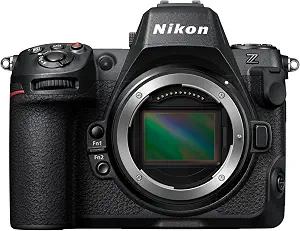
The Nikon Z 8 is a camera to consider when your shortlist depends on both detailed stills and advanced internal video, rather than one capture format alone. Its listed features include a 45.7MP stacked CMOS sensor, EXPEED 7 processing, several continuous shooting options, and internal 8K/60p and 4K/120p video. For Black Friday, start with the work you expect the camera to do: a still photographer weighing image formats may have different priorities from a creator choosing video modes. Then check that the exact offer and variant match your needs; this guide does not assume a particular promotion or price.
The Nikon Z 8 brings together specifications that can suit a photographer who also plans video projects. The 45.7MP stacked CMOS sensor and EXPEED 7 processing engine are central to its still-image offering, while its listed video options include internal 8K/60p and 4K/120p recording. That breadth can be useful if a single camera needs to cover different kinds of assignments, but the right choice depends on which modes you will actually use and how you prefer to work with the resulting files.
For action or changing moments, the camera offers 20, 30, 60 and 120 fps shooting options. Its autofocus detects focus as low as -9 EV and combines subject detection with 3D tracking. Those details may be relevant when deciding what to prioritize for your subjects and shooting situations; they are not a guarantee of a particular result. This is a sensible Best for mixed stills and video choice based on the range of listed capture options, not on a measured comparison with other cameras. During Black Friday, assess the complete feature set against your own assignments instead of letting a promotion alone set the decision.
Choose image formats around the finish you want
The Z 8 offers RAW 14-bit, High Efficiency RAW, 10-bit HEIF and JPEG 8-bit still-image formats. That variety gives you choices to consider before a shoot: whether you want to work with RAW files, prefer High Efficiency RAW, or expect to use HEIF or JPEG. The useful question is not which format sounds most advanced, but which one suits the way you select, edit and deliver images. If you expect to make adjustments after capture, compare the RAW options with your editing plans. If you want a more direct path to finished images, consider whether HEIF or JPEG fits your intended workflow.
Avoid choosing solely from a format name. Think about the people or projects receiving the images, the software and process you intend to use, and how much editing you want to do. Black Friday can make it tempting to focus on the offer first; instead, make a short list of the formats you expect to use and confirm the exact listing is for the camera you mean to buy. The listed choices establish what is available, but they do not establish which format will be best for every photographer.
Plan video capture from the finished project backward
Internal 8K/60p and 4K/120p video give the Z 8 distinct capture options to weigh against a project’s requirements. Before treating either mode as a reason to buy, identify what you plan to record and what your finished work calls for. A project built around one of these modes may make the corresponding capture option especially relevant; another workflow may not need both. This approach keeps the decision grounded in actual use rather than the appeal of a specification alone.
Video choices also affect the steps after recording. Consider how you intend to review, edit and deliver footage, and whether those steps fit the modes you expect to choose. The provided specifications name the internal options, but do not specify details such as file sizes or a required editing setup, so check those requirements independently before committing to a workflow. For Black Friday shopping, compare the exact camera offer against your project checklist and avoid assuming a deal includes anything beyond the stated product.
Decide whether RAW video belongs in your workflow
The camera supports internal 12-bit N-RAW and ProRes RAW recording. These options may matter to a creator who has a deliberate RAW-video process in mind; they may be less central to someone whose projects do not call for RAW recording. Consider how you will handle footage after capture and whether either named format fits your intended production process. The practical value lies in matching a recording option to the work, not in selecting every available mode.
If you are comparing configurations during Black Friday, keep the recording-format decision separate from the offer itself. Confirm that the exact listing is for the Nikon Z 8 and assess the stated camera features against your requirements. Do not infer that a particular accessory, software, or service is part of an offer unless the listing explicitly says so. A clear plan for how you will use N-RAW or ProRes RAW can make this feature easier to evaluate without assuming that it suits every video project.
Match autofocus details to the subject matter
The Z 8’s autofocus detects focus as low as -9 EV and combines subject detection with 3D tracking. Those are useful details to weigh if your photography involves subjects that move or scenes where you want to consider tracking features. They can also give a prospective buyer concrete questions to investigate: whether the listed focus tools align with the subjects they photograph, and how those tools fit their preferred way of working.
Treat the specifications as capabilities to consider, not a promise that every subject or situation will be handled identically. If autofocus is a deciding factor, write down the kinds of subjects you photograph and compare the camera’s stated features with those needs. Black Friday timing should not replace that evaluation: the relevant question is whether this particular camera’s subject detection, 3D tracking and low-light focus specification make sense for your plans.
Use burst options with intention
The listed continuous shooting options are 20, 30, 60 and 120 fps. A range of rates lets you consider different approaches to capturing a sequence, but it is worth deciding what moments you want to record before choosing a setting. For a scene that changes quickly, a higher listed option may be something to investigate; for other situations, the mode you prefer may differ. The specifications alone do not say which rate will suit a particular subject or how you should use it.
Think through the whole stills workflow rather than selecting the largest number by default. Consider what you want from the sequence and how you plan to review and choose images afterward. The available still-image formats also give you choices about how to work with individual photographs. During Black Friday, keep those intended uses alongside your offer comparison so a headline feature does not distract from whether the camera fits your real capture habits.
Check the listing against your actual requirements
Before checkout, compare the exact offer and variant with the features you have decided matter: sensor and processor, focus, still formats, continuous shooting options, video modes and RAW recording. Confirm the listing identifies the Nikon Z 8 you intend to purchase, and read the offer details rather than assuming that a promotion applies to every version or includes additional items. No particular Black Friday discount or stock status is established here, so base the decision on the live listing and your own requirements.
A useful final check is to separate essential needs from features you would simply like to explore. If internal 8K/60p video or 12-bit RAW recording is important to your planned work, make sure those named capabilities are part of your reason for choosing this model. If your priorities center on still images, focus on the stated sensor, formats and shooting options instead. This keeps Black Friday comparisons practical and makes it easier to judge an offer on its exact terms.
Key specs
Sensor and processor
45.7MP stacked CMOS sensor and EXPEED 7 processing engine.
Autofocus
detects focus as low as -9 EV, combines subject detection and 3D tracking.
Video
Internal 8K/60p and 4K/120p video.
RAW video
Internal 12-bit N-RAW and ProRes RAW recording.
Still image formats
RAW 14-bit, High Efficiency RAW, 10-bit HEIF and JPEG 8-bit.
Continuous shooting
20, 30, 60 and 120 fps shooting options.
Make your Black Friday choice
The Nikon Z 8 is worth considering when its combination of still-image formats, autofocus details, continuous shooting choices and internal video modes matches the work you expect to do. Choose around your actual subjects and editing plans, not a feature you may never use. When Black Friday arrives, verify the exact listing and compare its terms with that checklist; a promotion is useful only if the camera and offer fit your needs.